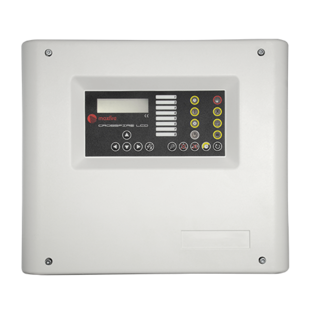
Dumo Seguridad is a fire alarm installation and maintenance company with more than 19 years of experience in fire detection, fire alarm and fire extinguishing for all types of buildings, from home fire alarms to complex systems for industrial warehouses.
Our systems include smoke and heat detectors, control panels, manual push buttons, sirens and beacons, fire extinguishers, Bies, sprinklers, all designed according to the regulations. RIPCI and CTE.
A fire detection system is not just a legal requirement, it is about gaining minutes to evacuate and reducing damage when it matters.
A fire detection system protects lives, reduces property damage, complies with regulations and ensures a rapid response that minimises risk and loss.
Fires give no warning. A short circuit in an electrical room, a fault in a restaurant kitchen, a spark in the communal garage or an overheating in the false ceiling of an industrial building. These situations are more frequent than we think, and the risk is often overlooked.
A professional fire system can detect the fire in its initial phase, either by means of smoke, heat or flame sensors depending on the area. From there, the fire alarm activates sirens and signalling to guide evacuation, while the control panel identifies exactly where the problem has originated and records the entire event. In installations that require it, visual fire alarms are also included for noisy spaces or those with hearing impairment.
Early fire detection is the most important thing when it comes to saving lives. When a detector identifies smoke, a sudden rise in temperature or the presence of gases, the fire alarm is activated immediately so that everyone in the building can hear it and see it to clear the area.
Those first few minutes are critical. A well-designed fire detection system is designed to warn before a fire gets out of control, protecting first and foremost those inside the building.
Many buildings are required by law to have a fire detection and alarm system. Communal garages, commercial premises, industrial buildings, hotels, residences and residents' associations have specific obligations that must be complied with and periodically reviewed.
We ensure that the components and configuration of your fire alarm system comply with RIPCI, CTE and local regulations.
A fire can devastate any property in minutes. In an industrial building, the machinery and the production line. In a warehouse or shop, all the stock and the capacity to continue serving orders. In an office, computer equipment, servers and critical documentation may be irrecoverable.
A professional fire alarm detects fire and helps to limit damage before it spreads. But a system that is not serviced is like not having one at all. Regular maintenance is what ensures it works when you really need it.
When a fire is detected late, the damage can be irreversible, affecting the continuity of a business.
A well-designed fire detection and alarm system reduces the impact and facilitates a return to normality with as little damage and time as possible.
Some insurers require certified fire detection and alarm systems to insure certain activities or capital. This is a common requirement for industrial buildings, high-risk premises and buildings with significant insured values.
Having a professional, well-installed and maintained fire protection system makes it easier to underwrite policies and can help you get a better deal on a case-by-case basis. We provide you with installation certificates and maintenance records so that you can present them to your insurer or at any inspection.
A fire detection system is a set of elements that work in a coordinated manner to detect, warn and help control a fire. Detectors, manual pushbuttons, control panel, sirens, beacons and communication systems form a circuit designed according to the use of the building, the applicable regulations and the specific risks of each area.
All our components are certified and compatible with each other according to the criteria of the UNE-EN 54 standard, guaranteeing reliability and coordinated operation.

Automatic fire detection can identify smoke in an office, a sudden rise in temperature in an industrial kitchen, the presence of gases in a garage or even direct flame in areas with flammable materials.
The key is putting the right detector in the right place. A well-designed fire detection system adapts the technology to each zone to accurately detect and minimise false alarms.
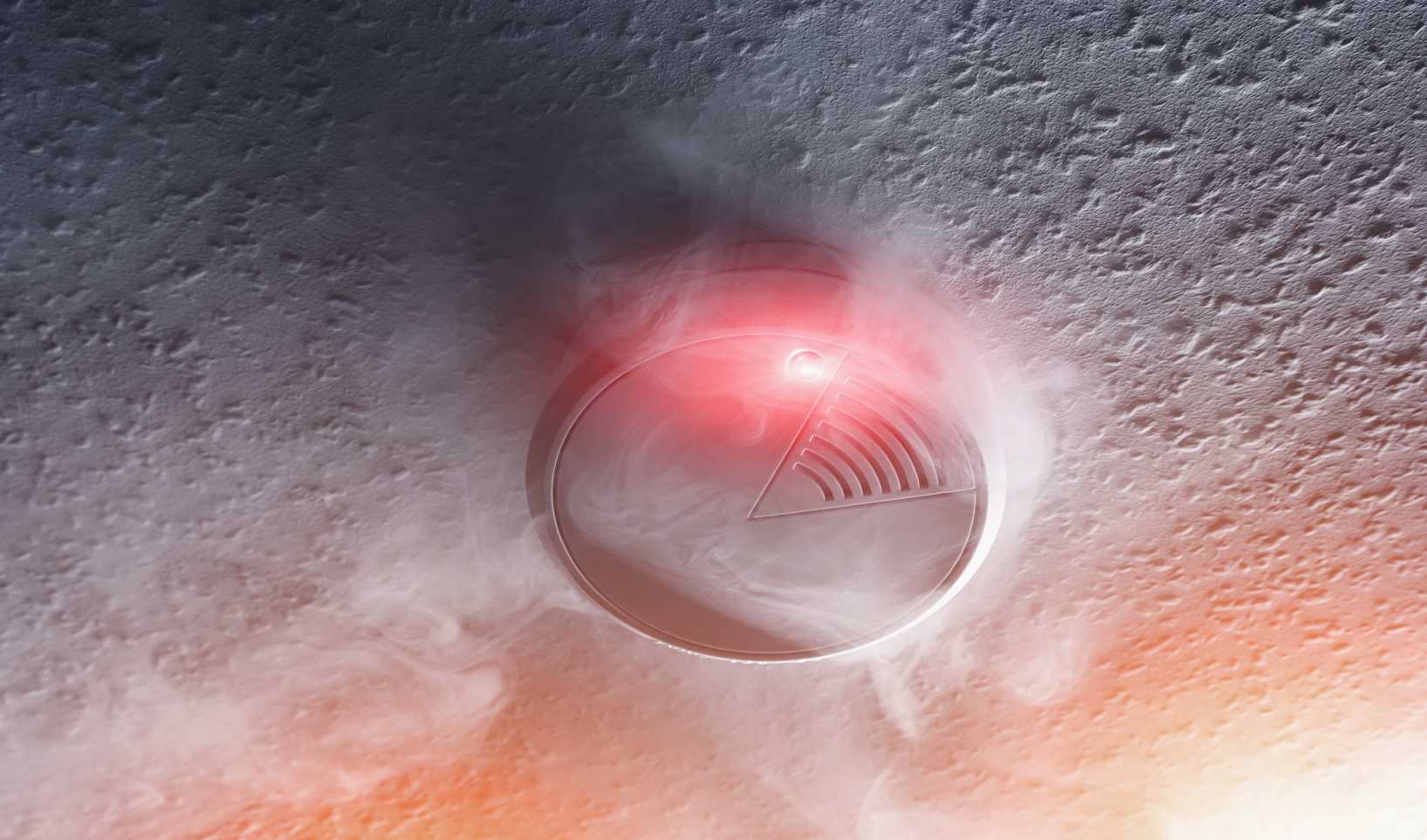
When a detector is activated, it sends the signal to the control panel of the fire detection and alarm system. The control panel validates the situation, identifies exactly in which zone it has occurred and determines the appropriate response.
This communication is fast and secure, reducing critical reaction times. In addition, the control panel logs all events, which is useful for audits, post-incident analysis and regulatory compliance.

Once the alert is confirmed, the system automatically activates audible sirens and light beacons to warn everyone in the building and initiate evacuation. This fire alarm ensures that no one is left unaware of the emergency.
Fire alarms are designed to be audible and visible even in large, noisy spaces or spaces with special conditions. The RIPCI establishes acoustic and visual perception requirements according to the ambient noise level and the characteristics of the occupants, which we take into account in every installation.

In installations that include automatic extinguishing, the system can activate sprinklers or extinguishing agents to control the fire immediately. This integration makes it possible to act even before emergency crews arrive.
Optionally, the fire alarm system can send automatic warnings to an alarm receiving centre or activate internal emergency protocols, depending on the needs of each installation.

The system records the entire sequence of any incident, allowing subsequent analysis and improvement of security protocols. In more advanced installations, we offer remote monitoring and control that facilitates the management of communities, businesses and large buildings.
For property managers and facility managers, this means being able to check system status, view history and manage incidents without unnecessary travel. The result is fewer false alarms, more traceability and more efficient maintenance.
Contracting a fire protection system with us is a transparent process, close and without surprises. We accompany you from the first contact to the installation and verification of the operation of the fire protection system.
It all starts with an initial conversation. You can contact us through our mobile phone, e-mail or contact form that you will find on the website.
From the first conversation, we gather information on number of plants, critical areas, regulations that may apply and address any concerns you may have.
Fast and non-binding responseA specialised technician from our team will visit your building to carry out a complete study. We will walk through the space, identify risk areas, analyse use and capacity, and propose the number and type of detectors, the location of the control panel, sirens, pushbuttons and wiring routes.
The fire alarm system for buildings is sized in accordance with RIPCI and CTE regulations and the reality of your building. We provide you with a clear and understandable proposal, indicating what is installed, where, why and what regulations are covered.
Once the proposal is approved, our team carries out the installation of fire alarms. The installation period varies depending on the scope of the project. We try to interfere as little as possible in your daily activity, coordinating schedules and leaving everything identified and signposted according to regulations.
At the end of the installation, we explain how everything works, how to interpret the alarms, how to test, how to silence or restore the system in case of a false alarm.
We leave the installation fully documented and ready for any inspection. Thereafter, we offer regular maintenance in accordance with the minimum RIPCI schedule (quarterly and six-monthly reviews depending on the element) and technical support for any future incidents or extensions.
Choosing the right fire systems company makes all the difference. At Dumo Security we combine local expertise, regulatory knowledge and a commitment to long-term service.
For almost two decades we have been carrying out fire alarm projects for houses, fire alarms for buildings, businesses and industries in Barcelona and surrounding areas.
We know the usual licensing and inspection requirements in the area and the reality of each type of building.
As a registered fire installation company, we have the necessary qualifications to design, install and maintain fire systems in accordance with current regulations.
We work with certified, brand-name fire detection and fire alarm systems. This means higher reliability, lower false alarm rates, integration with other systems and ease of maintenance.
The RIPCI requires components to be CE marked in accordance with the applicable UNE-EN 54 standards. All the equipment we install meets these requirements, guaranteeing compatibility and performance.
A fire alarm system without maintenance is no longer reliable. The RIPCI establishes minimum quarterly and six-monthly inspection schedules for the various components of the fire system.
We offer maintenance contracts adapted to each client that include regulatory reviews, documentary registration, reminders of expiry dates and corrective measures when any incident arises.
Every building is unique, and your fire protection system must be unique too. That's why we don't work with standard solutions that apply everywhere.
Before installation, we analyse how the space is laid out, where the points of greatest risk are (electrical rooms, storerooms, false ceilings) and which technology best fits your case, whether wired or wireless. With all this, we design a fire detection and alarm system that responds to the real needs of the building.
As a fire protection company, we advise on the applicable regulations and take care of all the necessary documentation, such as technical reports, drawings, installation certificates, maintenance records and inspection reports.
This accompaniment facilitates activity licences, fire inspections and periodic reviews, avoiding headaches.
If you are looking to protect your building against fire, at Dumo Seguridad we offer you a free technical study, a clear proposal with no small print and professional fire alarm installation with maintenance included.
We explain exactly what you need, why and how much it costs. No surprises.


It depends on the use and characteristics of the building. Garages of more than a certain surface area, commercial premises, industrial buildings, hotels, residences and many other uses are obliged to have fire detection systems according to the CTE, the RIPCI and specific sectorial regulations. In these cases, an approved fire alarm is a legal requirement.
The obligation varies according to activity, surface area, height, occupancy and other factors. In the preliminary study we verified
The RIPCI establishes a minimum maintenance programme with quarterly and six-monthly checks depending on the type of component. This includes detector checks, activation tests, control panel checks, battery checks and general system status.
We take care of scheduling and carrying out all inspections, leaving a documentary record of each one so that your documentation is always up to date for any inspection.
The price of a fire alarm depends on the project and can vary greatly. Factors such as the size of the space, the number of detectors required, the type of control panel and the specific characteristics of the installation influence the final cost. We offer you a personalised, no-obligation quote adapted to the real needs of your space.
Yes, both types of fire protection systems are available. Hardwired systems are ideal for new build installations or complete refurbishments, while wireless systems offer greater flexibility in existing spaces where wiring is difficult.
We will advise you on the best option according to the characteristics of your space and your specific needs.
Yes, the fire alarms we install are expandable and allow you to add detectors, zones or functionality in the future without having to change the entire installation. This is especially useful in growing businesses or buildings that change their use.
During the initial design we already take into account possible extensions to facilitate future integration.
There are different types of detectors depending on what needs to be detected. Smoke detectors are the most common in offices and general spaces. Heat detectors are used in kitchens, areas with vapours or environments where smoke can generate false alarms. There are also flame detectors for areas with a direct fire risk and gas detectors for garages and enclosed spaces.
In the design of the fire detection system we select the most suitable type of detector for each area according to its use and specific risks.
The RIPCI provides for quarterly checks for some items and six-monthly checks for others. As a minimum, the fire alarm should be serviced every three months with basic checks and every six months with more comprehensive checks.
We take care of scheduling and reminding you of each check-up so that you never miss it.
False alarms can occur for a variety of reasons, such as dust accumulated on detectors, steam, insects or sudden changes in temperature. A well-maintained fire alarm system minimises these occurrences.
If a false alarm occurs, you can silence the system from the control panel by following the procedure explained in the commissioning. If the false alarms are recurrent, we check the installation to identify and solve the cause.
No, the fire alarm is not directly connected to the fire brigade, but it can be connected to a 24/7 control centre which alerts the fire brigade if necessary. This system allows the alarm to be verified before emergency resources are mobilised, avoiding false alerts and ensuring an adequate response when it is really needed.
Yes, all professional building fire alarms have built-in battery back-up to maintain operation during power outages. The autonomy depends on the size of the system, but typically allows several hours of unpowered operation.
In addition, the system generates an alert when it detects a main power failure, allowing action to be taken before the batteries run out of power.
Fire alarms can be acoustic, visual or both. Sirens emit a loud sound to alert occupants, while light beacons reinforce the warning in noisy spaces or for the hearing impaired.
The RIPCI provides for perception requirements depending on the conditions of the space and its occupants. In the design of the system, we determine what type of signage is required for each zone.
Yes, although our headquarters are in Badalona, we carry out fire detection and alarm projects throughout the metropolitan area and province. Hospitalet, Badalona, Terrassa, Sabadell, Sant Cugat and other nearby towns are within our usual area of action.
For projects in other locations, please contact us and we will assess the feasibility.