Understanding the different types of alarm systems in Barcelona is the first step towards effectively protecting a home, a shop or an industrial unit. Not all systems offer the same level of coverage, and the right choice depends on the type of property, the area and the level of risk. In this guide, we review the main types of security alarms based on how they transmit the alert, the area they protect, their certified security rating and their components, so that you can make an informed decision about which one suits your situation.
What are security alarms and what are they used for?
Security alarms are electronic systems designed to detect intrusions, unauthorised movement or emergency situations and trigger an immediate response. Their main function is not only to activate a siren, but also to deter potential intruders before they act, and to quickly alert the property managers or a professional monitoring centre when the threat is real.
In Barcelona and its metropolitan area, where high-rise flats, high-street shops, detached houses in areas such as Sarrià and Pedralbes, and industrial units in outlying business parks all coexist, each space has its own specific vulnerabilities. An informed choice makes the difference between effective protection and an underutilised investment.
Types of alarms based on their alert transmission technology
The way in which an alarm system delivers its alerts is one of the most important factors in assessing its true effectiveness.
Alarms connected to a monitoring centre
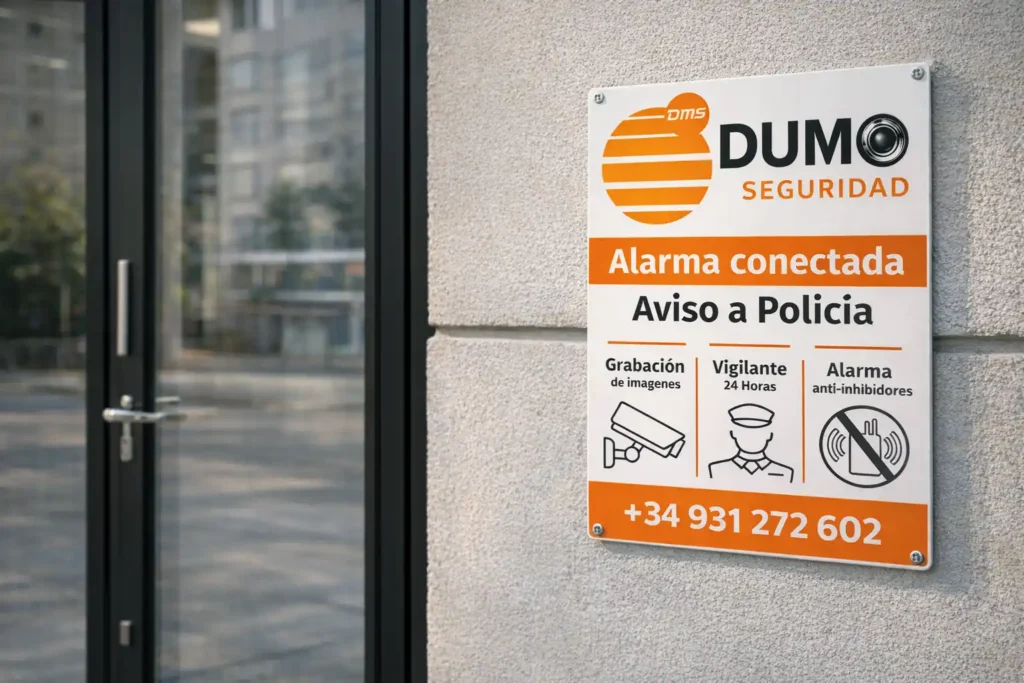
They represent the highest standard of protection available on the market. When an alert is triggered, the system automatically transmits it to an alarm receiving centre (ARC) that operates 24 hours a day, 365 days a year. Specialised operators verify the signal in real time and, if necessary, coordinate the dispatch of a Keyholding and Alarm Response Service or alert the security forces. In Barcelona, this verification process and the speed of the response service across the metropolitan area are crucial: a verified alert triggers a priority response. This type of alarm is the only one recognised by Spanish private security regulations for properties requiring a certified level of protection.
Self-managed alarms with mobile alerts
These are systems that notify the user directly via an app when they detect movement, doors being opened or a power cut. Their main advantage is that there is no monthly monitoring fee. Their key limitation is that a response depends entirely on the owner being available and acting in time, which in many cases proves insufficient.
Wireless alarms versus wired alarms
Regardless of the method used to transmit alerts, systems are also classified according to how their internal components are connected. Wireless alarms are easier to install without the need for building work and allow the system to be expanded with new detectors at any time, making them very common in flats and premises in central Barcelona where there is a desire to avoid altering the building. Wired alarms offer greater stability, are less susceptible to interference and are more suitable for new-build properties or large-scale installations where continuous signal reliability is critical.
Types of alarms according to security level (1, 2, 3 and 4)
In addition to their technology, alarm systems are classified by degree of security, a scale set out in the UNE-EN 50131 standard that defines the level of protection and resistance to tampering. It is a key criterion, as it determines which system each property requires and, in certain businesses, which system is required by law.
- Grade 1: basic protection for minimal risks. Not recommended except in very specific cases.
- Grade 2: the standard for most homes and businesses. It includes a connection to a security monitoring centre and conventional intrusion detection.
- Grade 3: for properties containing high-value assets or posing a high risk. It includes video surveillance, seismic detectors and enhanced protection against jamming. It is required by law for certain businesses.
- Grade 4: the highest level, reserved for critical facilities.
For most homes in Barcelona, a Grade 2 alarm is sufficient; shops with goods on display usually require a Grade 3 alarm. If you run a business, you can find more detailed information on the different grades and legal requirements in our guide to alarm types for businesses.
Types of alarms according to the area to be protected
There is no one-size-fits-all alarm system that works well in every setting. Each type of property has specific vulnerabilities that the system must address in a proportionate manner.
Home alarms
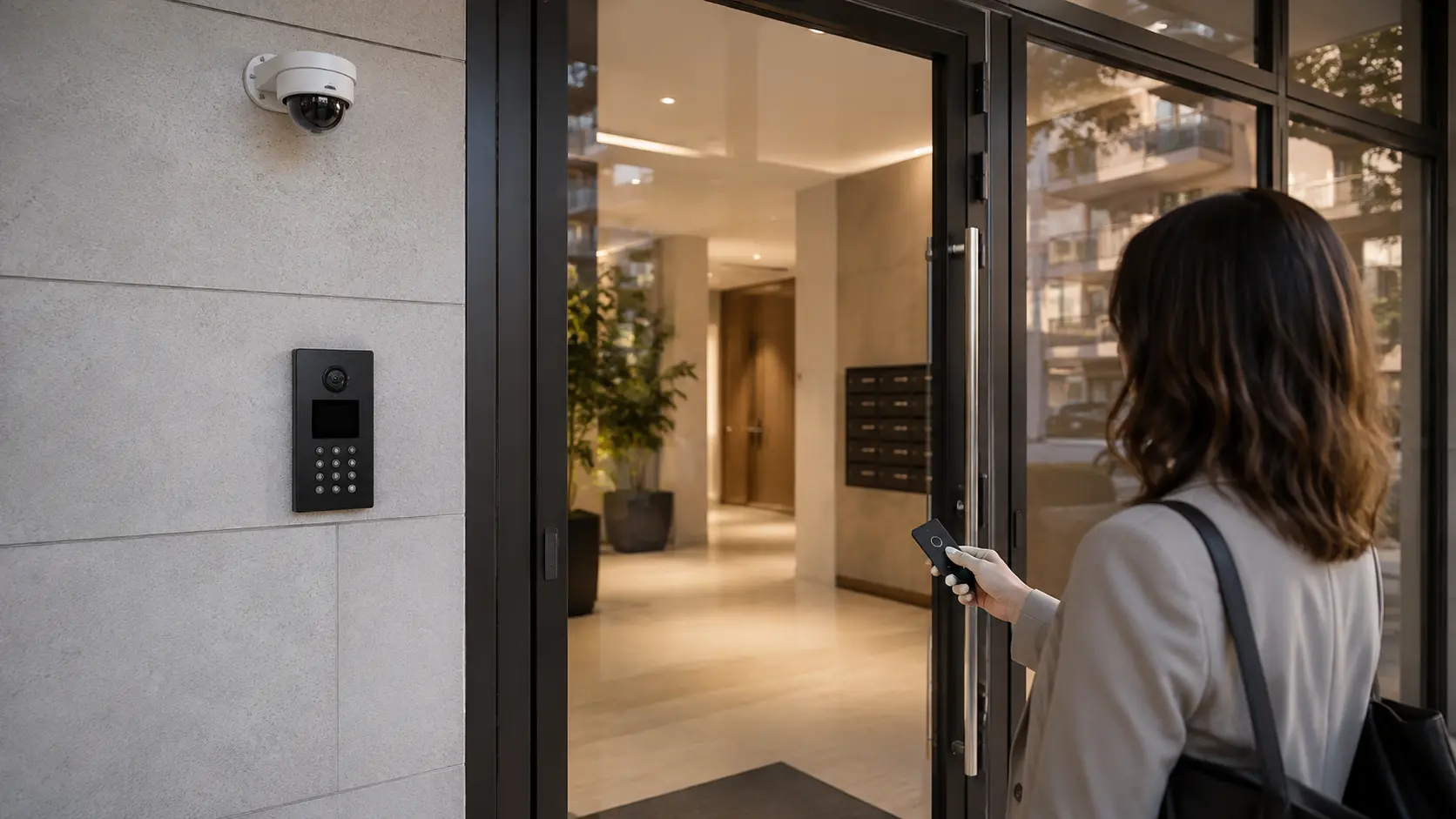
Residential alarm systems in Barcelona typically combine indoor motion detectors, magnetic sensors on doors and windows, and an outdoor deterrent siren. Connection to a monitoring centre is particularly useful in homes that are left unoccupied during the day or during holiday periods, which is common in a city with so many second homes and high levels of mobility. Many home alarms They also incorporate smoke, gas and extreme temperature detection, making them a comprehensive security solution for a wide range of risks.
Alarms for businesses and shops
The business alarms They cater to different needs: larger floor space, restricted-access areas such as till areas or storerooms, and periods when the premises are closed and goods or cash are left on the premises. It is common to combine dual-technology volumetric detectors with seismic detectors in shop windows or safes, and in certain businesses, the law requires Grade 3. If you have a shop or business premises, we explain this in detail in the specific guide on types of business alarms.
Alarms for industrial buildings and outdoor areas
Industrial facilities require alarms for industrial buildings with perimeter protection to detect intruders before they reach the interior of the building. Infrared barriers, weather-compensated outdoor detectors and active perimeter detection systems are the most commonly used. These are combined with indoor volumetric alarms and, frequently, with video surveillance cameras that allow each alert received to be visually verified, something particularly relevant in the industrial estates of the Barcelona metropolitan area, where the response must be coordinated remotely.
Comparison table of alarm types
This table summarises the main types to help you decide which one is best suited to your property. The final decision on an alarm system should always be based on a technical assessment carried out by professionals.
| Alarm type | How it works | Ideal for | Level of protection |
| Connected to CRA | It transmits the alert to a monitoring centre, which verifies the report and responds 24 hours a day. It also continuously monitors the system’s status to detect any attempts at sabotage or tampering. | Homes and businesses seeking certified protection | High |
| Self-installing (notification sent to your mobile) | Notify the user directly via the app, without going through a central system | Low-risk areas or as a supplement | Lower-middle |
| Wireless | Components connected via radio frequency, with no building work required | Flats and commercial premises where wiring is not possible | Mid-high |
| Wired | Physically connected components, maximum stability | New-build projects and large-scale developments | High |
| Volumetric (interior) | Detects presence via motion (PIR/microwave) | Interiors of homes and shops | Mid-high |
| Perimeter (outdoor) | Detect before entering the building | Industrial units, detached houses, outdoor spaces | High |
Types of alarms according to their power source and battery life
An alarm system must continue to operate even during a power cut. All approved systems are fitted with a backup battery that guarantees between 12 and 48 hours of operation. There are also solar-powered systems, which are useful for premises not connected to the mains electricity supply, such as country properties, building sites or warehouses in outlying industrial areas.
Key components of a complete alarm system
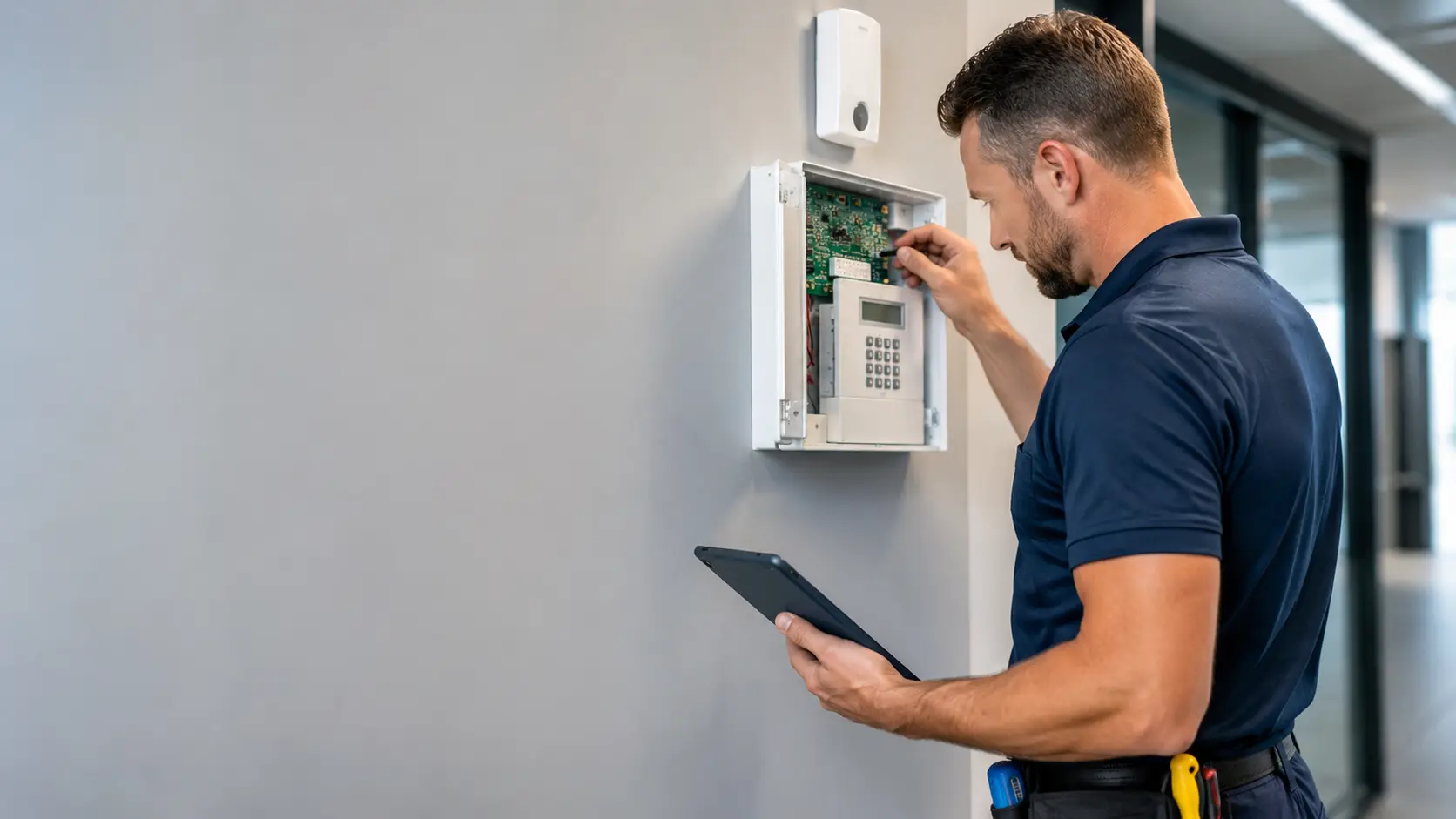
Regardless of the type chosen, any effective alarm system includes the following key components: the control panel, which processes all signals; motion detectors (PIR, microwave or combined); magnetic sensors on doors and windows; indoor and outdoor sirens with audible and visual alarms; a dual-path communicator —GSM plus IP— for redundant alert transmission; a keypad or control panel for arming and disarming; and a backup battery in the event of a power cut.
How to choose the most suitable type of alarm for your situation in Barcelona
Choosing the right alarm system depends on a number of factors: the type and size of the property, the level of risk in the area, whether the premises are left unoccupied for long periods, the presence of high-value items, and the budget available for both the installation and the monthly maintenance of the system.
A professional technical assessment carried out in advance is the most effective way of sizing the system without incurring either unnecessary excesses or gaps in coverage. The aim is for the system to deter, detect and alert quickly and reliably, whilst minimising false alarms, which erode trust over time. Technology is only part of the equation: the response to a genuine alert – whether through a response service or coordination with the police – is what determines whether the system truly provides protection. In our security alarm company We carry out this technical assessment in Barcelona and the surrounding area to recommend the best type of alarm system for each property.
Frequently asked questions about types of alarms in Barcelona
What sort of alarm do I need in Barcelona?
It depends on the property and the level of risk. For a flat or primary residence in Barcelona, a Grade 2 system connected to a monitoring centre, with volumetric detectors and magnetic sensors, is standard. For a retail premises with valuable goods on display, a Grade 3 system may be necessary, and for an industrial unit, external perimeter protection. A preliminary technical assessment is what enables the system to be correctly sized.
Alarm with or without a subscription fee?
A subscription-based alarm system is connected to a monitoring centre that verifies alerts and notifies you 24/7. It also monitors the security system to ensure it is functioning correctly and detects any attempts at sabotage or tampering. It may also include a response service; this is the recommended option when there are people or property to protect. A non-subscription alarm only notifies the owner’s mobile phone; the owner must then verify the alert and take action themselves: this is cheaper but leaves the entire response in their hands. For most homes and businesses in Barcelona, connection to a monitoring centre offers substantially greater protection.
Is it compulsory to connect the alarm to a monitoring centre?
Not as a general rule, but it is required by law for certain businesses classified as Grade 3 (jewellers, petrol stations, lottery outlets, amongst others). For all other premises, it is not compulsory, although connection to a central monitoring station is what distinguishes an alarm that merely alerts someone from one that actually triggers a verified response.
What is the difference between a wireless alarm and a wired one?
A wireless alarm system connects its components via radio frequency; it requires no building work and is easy to expand, making it the most common choice for flats and commercial premises. A wired alarm system connects devices physically, offering maximum stability and resistance to interference, and is preferable in new-build properties or large installations where continuous reliability is critical.