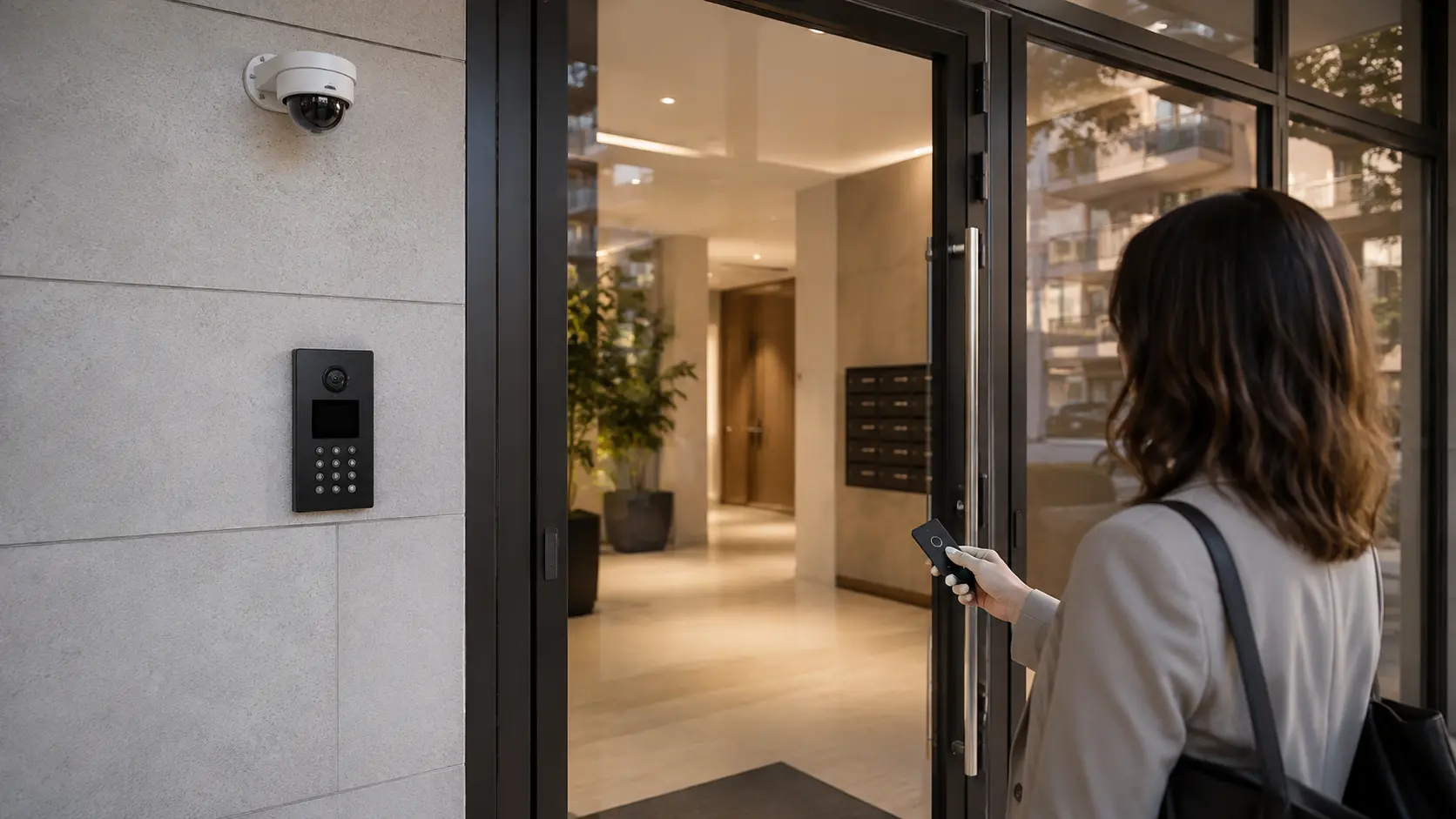
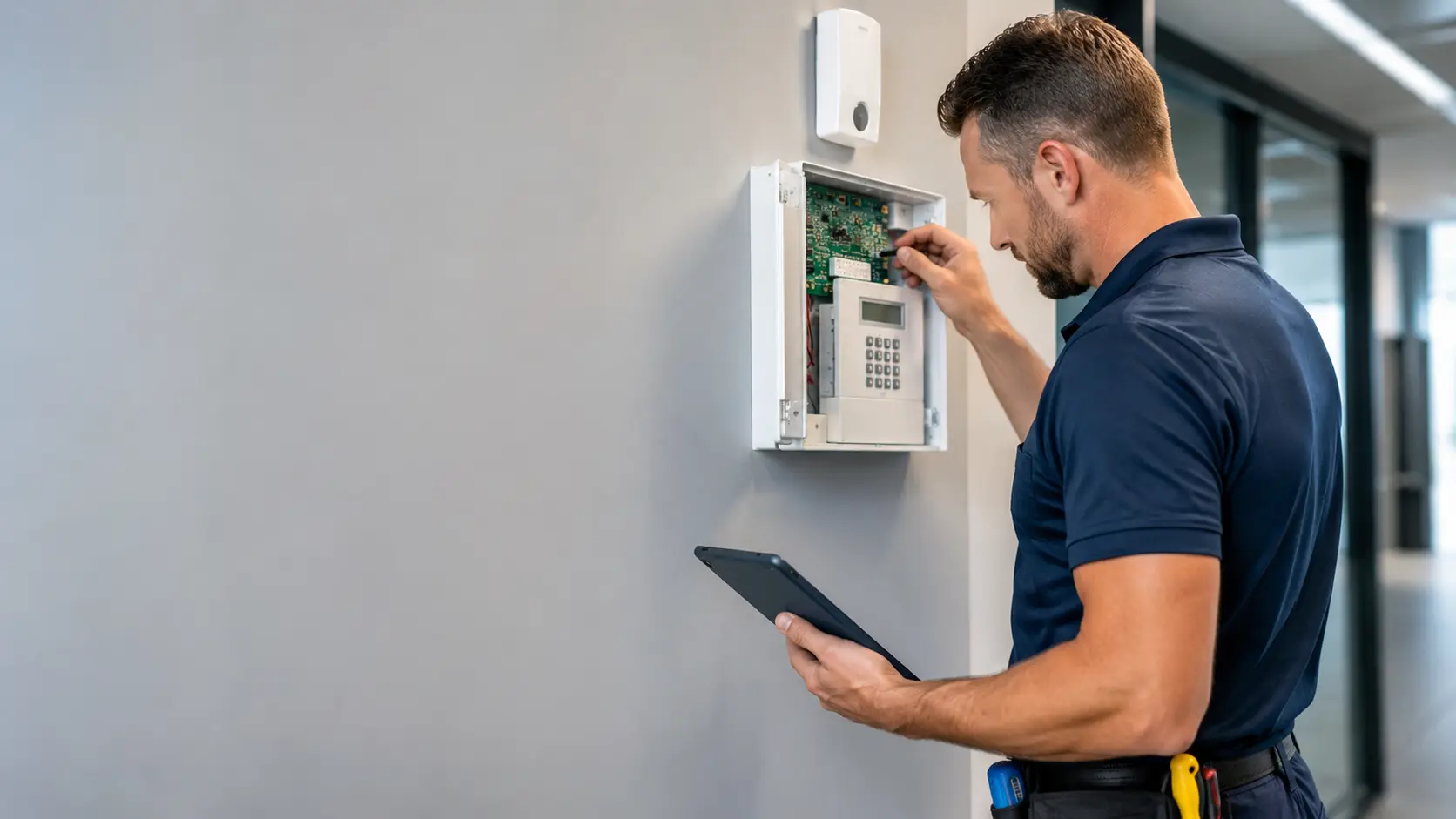
What is the key collection and safekeeping service?
The key escort and custody service It involves a security company sending a representative to a home or business premises when the alarm is triggered, checking what has happened and, if necessary, entering the premises using a set of keys that the company keeps securely. This service complements the traditional alarm system: whilst the system detects the incident and the monitoring centre verifies it, the security guard is the one who goes to the scene to confirm that everything is in order or to activate the appropriate protocol.
How does the Acuda service work, step by step?
The process always begins at the alarm receiving centre, which decides whether to dispatch the emergency response team.
Preliminary verification at the receiving station
When a sensor detects an incident, the signal is sent to the alarm receiving centre, where an operator checks whether it is a false alarm or a genuine incident before dispatching anyone.
Deployment of the on-call security guard
If the check confirms that something is amiss, a security guard is sent to the premises. The guard arrives at the home or business, inspects the perimeter and, if necessary, enters the premises using the key held in safekeeping to check that there are no unauthorised persons present.
Custody of keys
The keys that grant this access are kept under the strictest security measures, identified solely by an internal code – never by the property’s address – so that, even if they were to go missing, no one would be able to link them to the home or business to which they belong.
When is the Acuda service activated?
The on-call service is primarily activated in three situations: when an alarm is triggered outside normal working hours and no one is available to attend the premises; when the owner is away and cannot attend in person; or when the monitoring centre needs to visually confirm an incident that is not fully covered by the cameras. It is particularly useful for businesses, pharmacies and industrial premises that are closed at night or at the weekend, as it ensures that there is always someone able to respond even if the owner cannot be contacted.
Advantages of the emergency response service compared to an alarm on its own
An alarm without an emergency response service simply alerts you, but takes no action: the homeowner receives a notification and must decide whether to go there themselves, call a neighbour or contact the police. The emergency response and key-holding service removes that uncertainty because there is always a professional who can arrive within minutes, assess the situation judiciously and, if necessary, gain entry to the property without waiting for the owner to arrive from another part of the city. For those who live or work in Barcelona and frequently travel outside the metropolitan area, this peace of mind is one of the main reasons for taking out the service alongside the alarm.
Key collection and safekeeping services for homes and businesses in the Barcelona metropolitan area
In Barcelona and nearby towns such as Cornellà de Llobregat, Sant Boi de Llobregat and Badalona, the on-call service is particularly valuable for detached houses and commercial premises that are left unoccupied for long periods. A business located in an industrial estate, for example, may be closed all weekend: if an alarm goes off on a Saturday night, the on-call service ensures that someone checks the premises without the owner having to travel from their home. This service is usually taken out alongside a business alarm system, so that both detection and physical response are provided by the same supplier.
Frequently asked questions about the key collection and safekeeping service
Is it safe to have an external company hold my keys?
Yes, provided they are identified by an internal code and stored under controlled conditions, with no visible reference to the property’s address. That way, even if someone were to gain access to the keys, there would be no way of knowing which property they belong to.
The key holding service is specifically designed to provide a swift response to any incident without compromising your security. The keys are stored in safes or secure vaults, with restricted and logged access, so that there is a record at all times of who uses them and when.
When a verified alarm is triggered and access to the property is required, authorised staff can go there with the keys to investigate the incident or grant entry to the police and security forces, without you having to go there yourself. The entire process is carried out in accordance with protocols that ensure traceability and confidentiality at every stage.
Does the service always come into your home or business?
Not necessarily: first, they inspect the exterior and only enter the building if there are genuine signs of an incident. The aim of the emergency response service is to ascertain what has happened on site, not to enter as a matter of routine every time an alert is received.
When an alarm is triggered, the security guard goes to the premises and carries out a perimeter check: they check doors, windows, entry points and look for any signs of intrusion or tampering. In many cases, this external check is sufficient to confirm that it is a false alarm and to close the incident without needing to enter the premises.
If you detect signs of an actual intrusion, act in accordance with the established protocol: notify the Alarm Receiving Centre and, where appropriate, the police, with whom you should coordinate access to the premises if the keys are in your possession. This ensures a proportionate response, restricting entry to the premises to situations where it is genuinely justified.
Can you sign up for the Acuda service without handing over your keys?
Yes, although without keys the security guard can only check from the outside, which limits their ability to respond to a break-in that has already taken place. They will be able to inspect the perimeter and check for signs of forced entry, but they will not be able to gain access to the interior to see what has happened or whether the intruder is still inside.
For this reason, on-call services and key holding are complementary services. When contracted together, they provide a comprehensive response: the security guard not only assesses the incident from outside, but can also enter the premises or facilitate access for the police and other law enforcement agencies when the situation requires it.