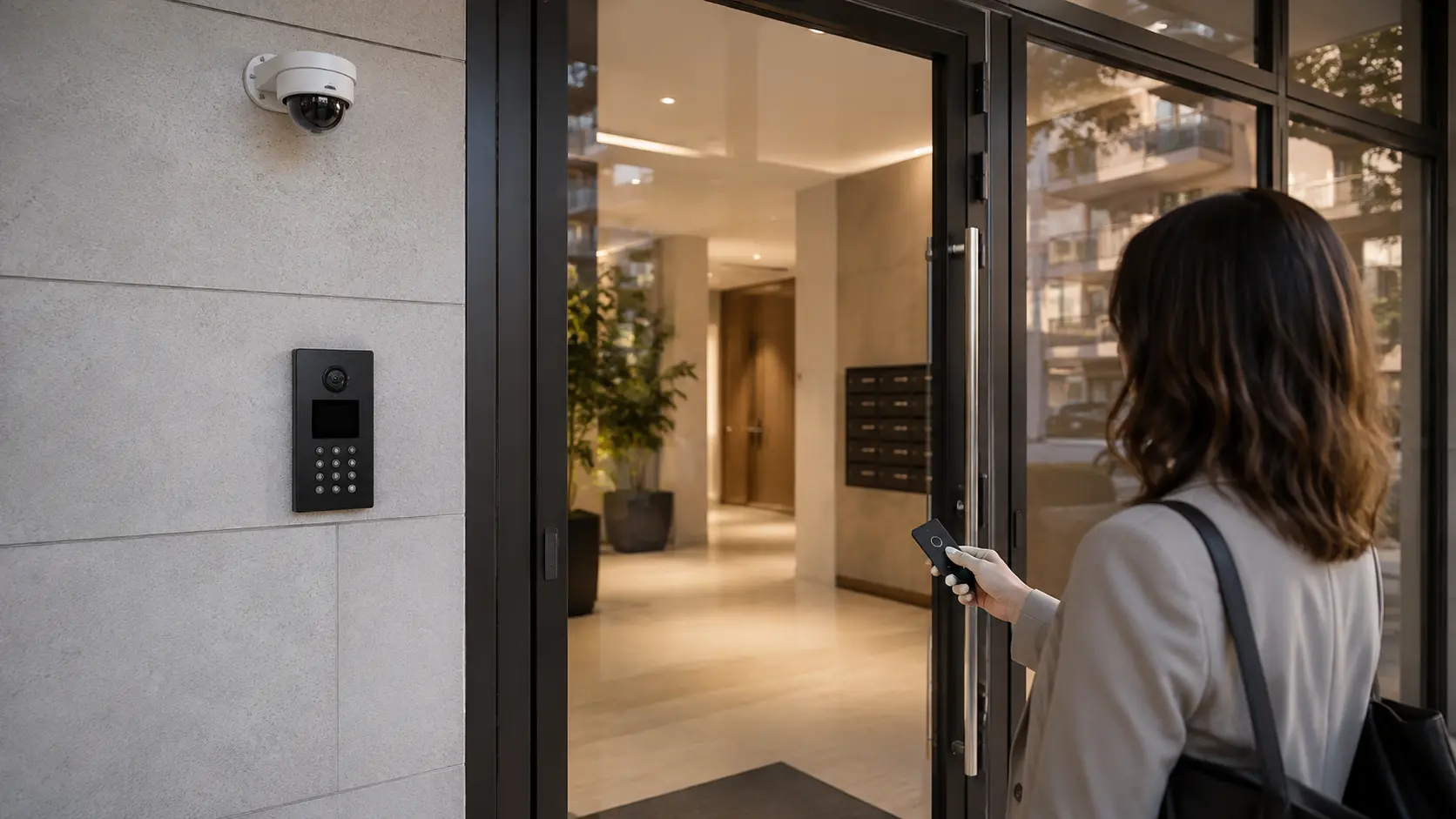
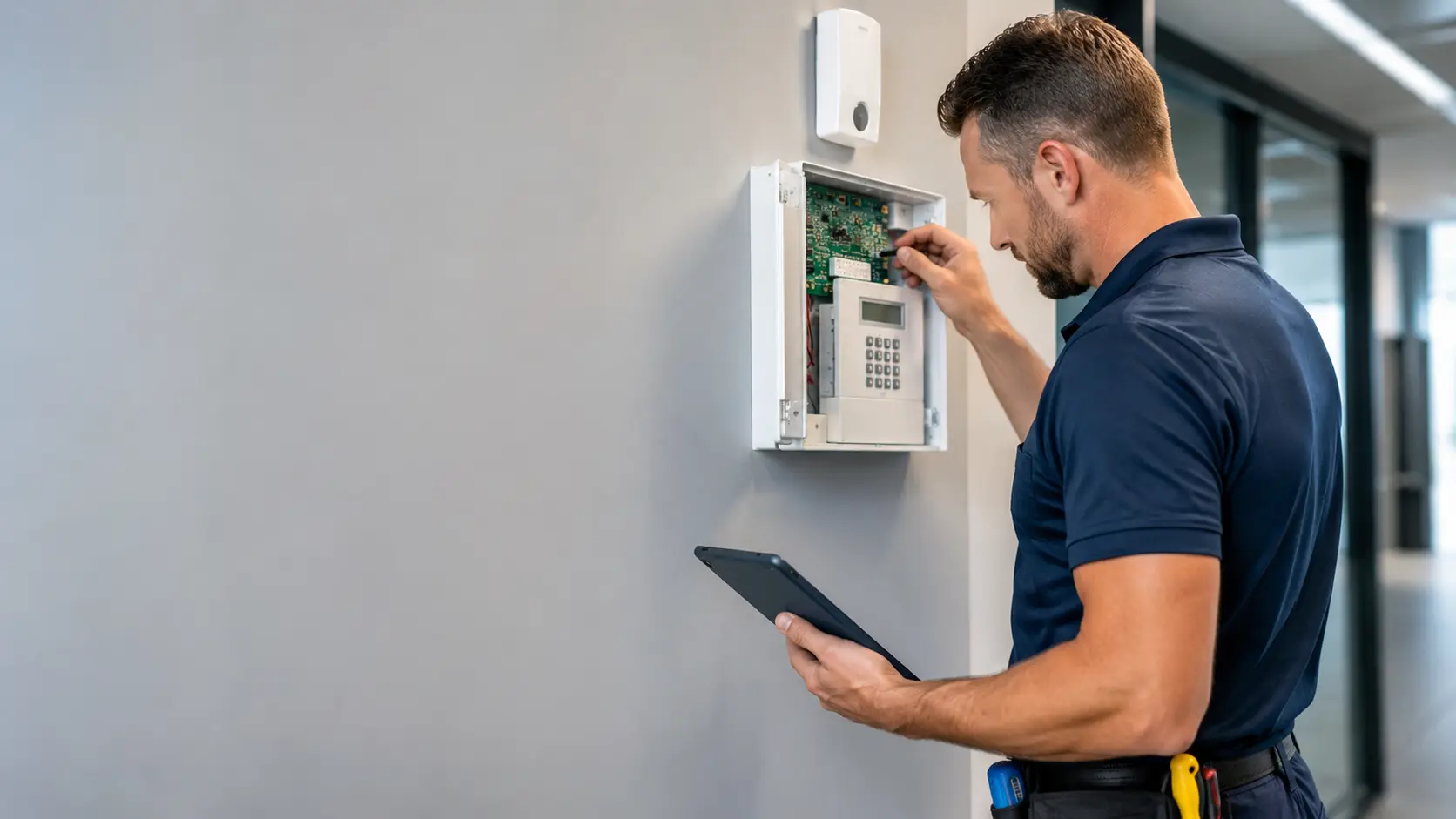
The security systems maintenance It involves regularly checking alarms, CCTV cameras, sensors and fire-fighting equipment to ensure they are working properly and to rectify any faults before they develop into a real problem.
It is not the same as a one-off breakdown: maintenance is preventative, whereas breakdown repairs are reactive and take place when something has already stopped working.
What does a servicing check-up involve?
A comprehensive maintenance check covers all the components of the security system.
Checking sensors and detectors
The motion, opening and glass-break sensors are checked to ensure they are responding with the correct sensitivity, as dust, damp or the passage of time can affect their operation without this being obvious to the naked eye.
Battery and power status
The technician checks the alarm panel’s backup battery, which keeps the system running during a power cut. A flat battery is one of the most common reasons why an alarm stops transmitting signals without anyone realising until it is too late.
Communication with the receiving centre
It is verified that the signal reaches the alarm receiving centre, checking the transmission line (IP, mobile or telephone) and confirming that the customer details and zones are up to date.
Camera cleaning and calibration
At video surveillance systems, maintenance includes cleaning the lenses, adjusting the focus and checking the recorder to ensure that images are stored with the required quality and retention period.
How often does a security system need to be serviced?
The recommended frequency depends on the type of installation and how it is used. For a home alarm system, an annual service is usually sufficient if the system is operating normally. For businesses, pharmacies or industrial premises, where the system is used more intensively and a fault has a greater impact on security, it is standard practice to schedule six-monthly inspections. In addition to scheduled visits, any security system should be checked following a prolonged power cut, a storm involving lightning strikes or any incident that may have affected the property’s electrical installation.
Regulations on the maintenance of security systems in Spain
Act 5/2014 on Private Security and its implementing regulations stipulate that the security system installation companies They must ensure the proper functioning of the installations connected to a receiving centre, which in practice requires regular, documented maintenance. In the case of fire protection systems, the Fire Protection Installations Regulations (RIPCI) are even stricter and stipulate quarterly, half-yearly and annual inspections depending on the type of equipment, with a requirement to record these in the building’s maintenance log.
Alarm and CCTV maintenance in Barcelona and the surrounding area
In Barcelona, where residential properties, shops and industrial units coexist alongside security systems of varying ages, preventive maintenance is particularly important during the months of highest humidity, when outdoor sensors and cameras are more prone to failure. In towns within the metropolitan area such as Gavà, Viladecans and Castelldefels, where many homes have outdoor perimeter alarms, regular inspection becomes even more important because these components are directly exposed to the elements all year round.
Frequently Asked Questions about the Maintenance of Security Systems
What happens if I don’t service my alarm?
The system may appear to be working normally, whilst in reality it has stopped transmitting correctly to the monitoring centre, meaning that in the event of a genuine incident, no signal may be received. This is the most serious risk: believing that you are protected when, in practice, the alarm is no longer fulfilling its function.
Over time, any system can develop subtle faults: flat batteries, misaligned sensors, communication problems with the control centre, or faults that can only be detected during a service. Regular maintenance ensures that all components are working properly and that the signal is being transmitted correctly, rectifying these faults before they become a problem.
As well as ensuring the system works properly, maintenance also has a regulatory aspect: private security regulations require periodic inspections of systems connected to an Alarm Receiving Centre. Keeping your alarm system up to date not only ensures you have effective protection, but also prevents the system from falling below the required standards.
Does the maintenance cover breakdowns?
It depends on the contract: some maintenance plans include repairs in the event of a breakdown at no extra cost, whilst others only cover preventive servicing. That is why it is important to understand exactly what your plan covers before taking it out, so that you know what cover you have in the event of a system failure.
It is important to distinguish between two concepts. Preventative maintenance consists of regular inspections to check that everything is working correctly and to anticipate potential faults. Corrective maintenance, on the other hand, involves repairing a fault once it has occurred. Some plans include both, whilst others charge for repairs separately.
How long does a service take?
For a home alarm system, this usually takes less than an hour; for more complex installations, such as industrial buildings with several integrated systems, it can take a full day. The time required depends directly on the number of components that need to be checked and how they are connected to one another.
In any case, this is a planned visit that is coordinated with you in advance to ensure it is as unobtrusive as possible. Before the visit, we can provide you with an estimate of the time required based on the characteristics of your installation, so that you know how long it will take and can make the necessary arrangements without any unexpected delays.