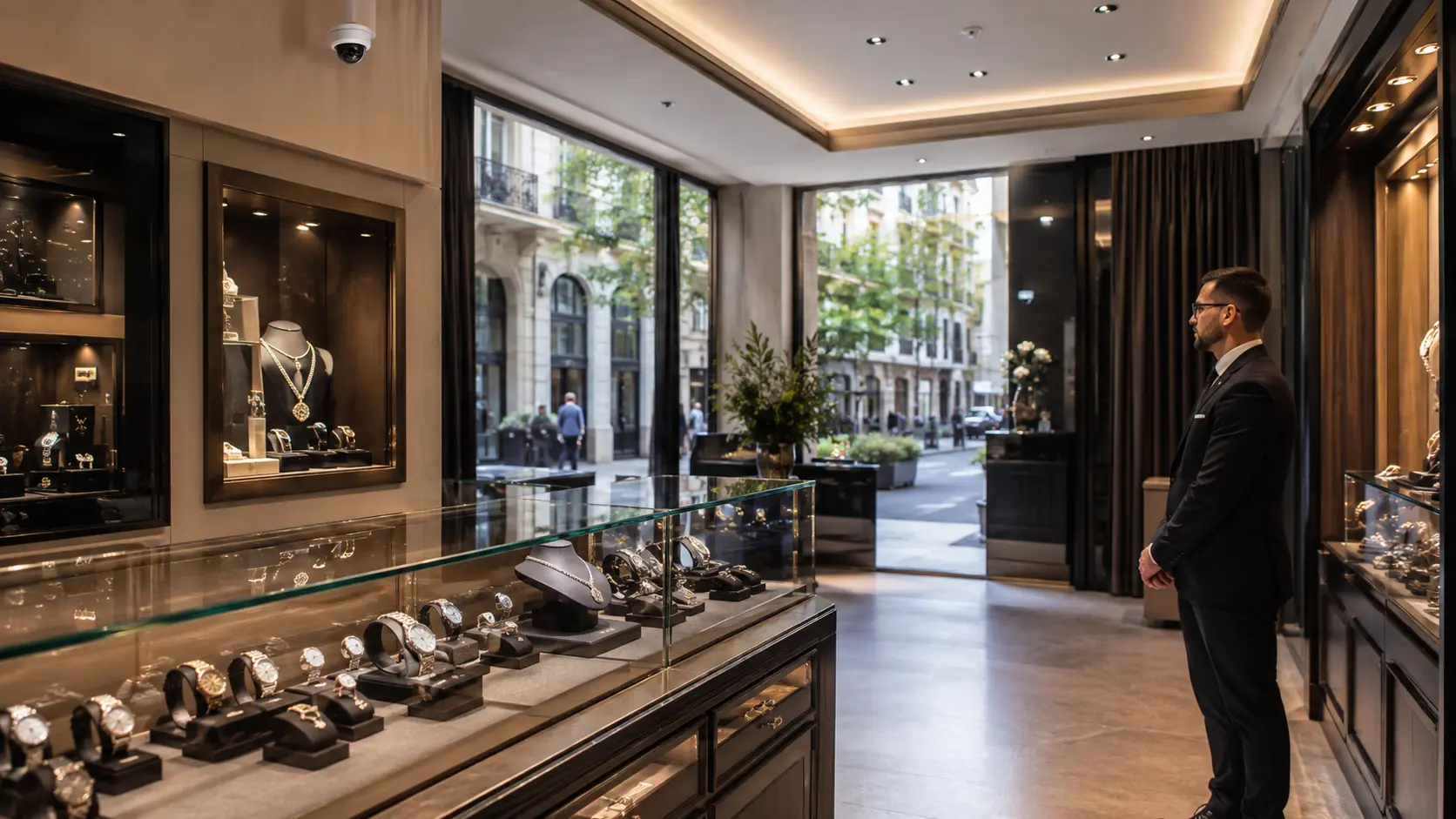
A jewellery shop contains, within just a few square metres, merchandise worth far more than that of any other shop of a similar size, making it a prime target for robbery involving violence or intimidation. In Barcelona, where neighbourhood jewellers sit alongside high-end establishments in areas such as the Eixample or the Gothic Quarter, private security regulations require this sector to meet a Grade 3 level of protection, well above that required of a conventional shop.
Why do jewellers need a higher level of security than other shops?
Jewellery shops require a higher level of security because the value of the goods on display in the shop window and inside the premises far exceeds that of any other business of a similar size, making them a frequent target for burglaries or robberies involving intimidation. Unlike a clothing or food shop, a jewellery shop cannot afford to rely solely on a deterrent alarm: it needs systems that physically delay the intruder and guarantee a verified response within seconds.
Which regulations require jewellers to have Grade 3 security systems?
The regulations governing safety in jewellery shops are the Law 5/2014 on Private Security and the implementing regulations, which classify this type of establishment as one required to have enhanced security measures approved by the Home Office. Depending on the establishment’s turnover and risk profile, this includes the requirement to Grade 3 alarm systems in jewellers’ shops (the highest level for commercial use according to the standard EN 50131), a mandatory connection to an approved alarm monitoring centre and, in many cases, video surveillance with certified recordings. Failure to comply with these requirements may result in administrative penalties, as well as leaving the business without insurance cover in the event of a burglary.
What security systems do jewellers typically use?
Jewellery shops combine several levels of security that work in tandem, rather than relying on a single system.
Grade 3 alarm with dual verification
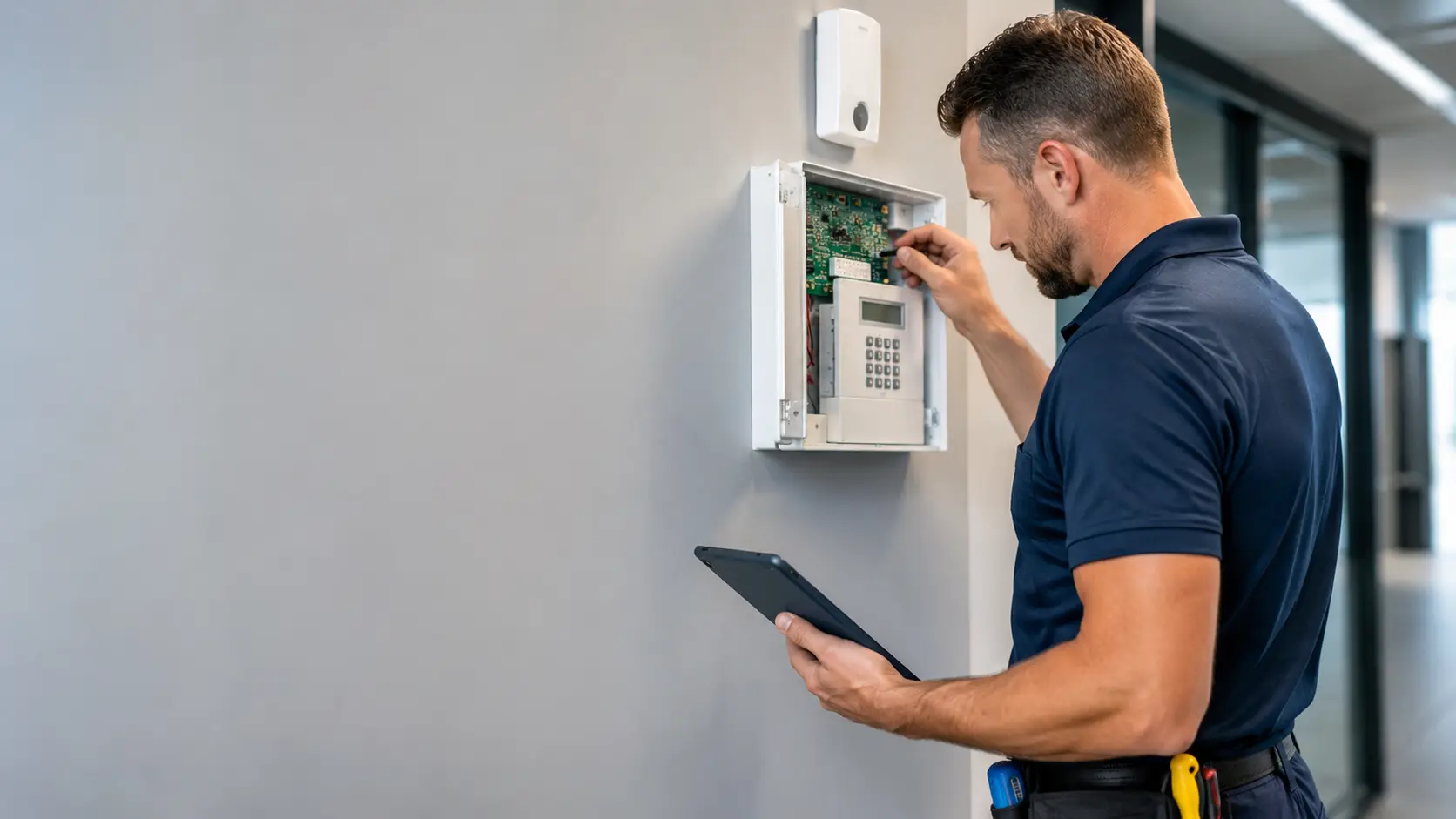
Grade 3 is the most stringent alarm level for commercial use: it incorporates tamper-resistant sensors and enhanced verification protocols before an alarm is triggered, thereby minimising the risk of a genuine alarm going unnoticed or of constant false alarms being generated.
Video surveillance with video analytics
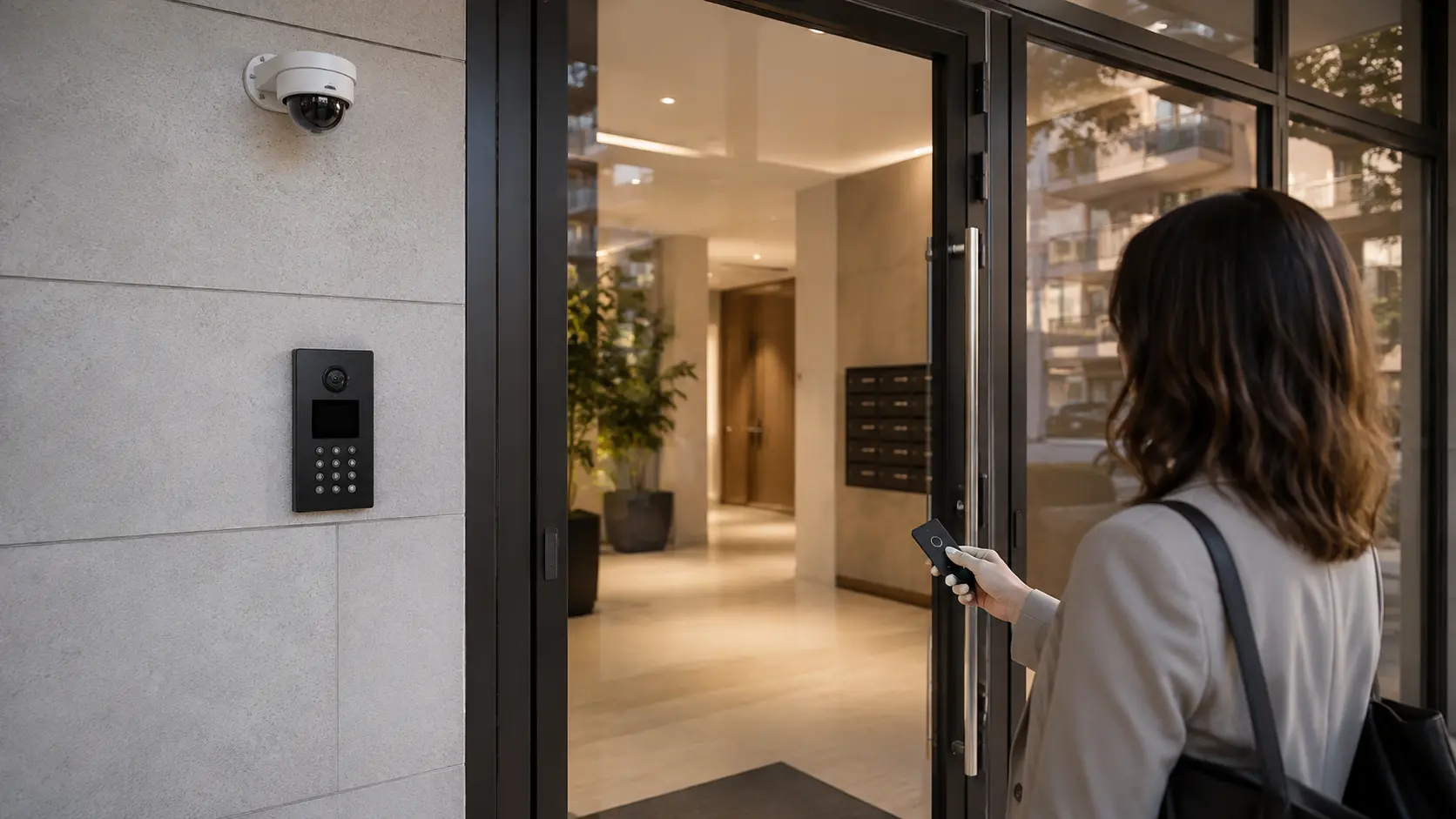
Video analytics cameras installed by a video surveillance and CCTV company in Barcelona, they can detect unusual behaviour – such as someone lingering in front of a shop window for longer than usual – and trigger an alert before a theft takes place, rather than simply recording footage for review afterwards.
Silent alarm and panic button
In the event of a robbery involving intimidation, staff need to be able to trigger an alert without the assailant noticing. The silent alarm and the panic button connected to the alarm receiving centre enable the police to be alerted without increasing the risk inside the premises.
Locks and display cabinets with additional physical protection
Alongside electronic security measures, many jewellers are reinforcing their shop windows and display cases with safety glass or motorised locks, which delay access long enough for help to arrive before the theft is carried out.
What role does the monitoring centre play in the security of a jewellery shop?
The alarm monitoring centre is where each signal is checked and a decision is made on how to respond, which is particularly critical in jewellery shops given the time it takes to confirm an alert. When the alarm is triggered outside business hours, the key escort and custody service They can go to the premises to check on the incident without the owner having to be there in person, which is particularly useful at night or in the early hours of the morning.
Security for jewellers in Barcelona and the surrounding area
In Barcelona, jewellers in the city centre and in shopping districts such as the Eixample face the specific risk of vehicle-ramming robberies, whilst in towns within the metropolitan area such as Sant Boi de Llobregat, Cornellà de Llobregat and Gavà, the risk pattern tends to centre on burglaries outside business hours. In both cases, the combination of a Grade 3 alarm system, CCTV and a permanent connection to a monitoring centre is the minimum standard required in the sector.
Frequently Asked Questions about Security in Jewellery Shops
What level of security does a jewellery shop need?
It is standard practice for a jeweller’s to install a Grade 3 alarm, the highest level specified for commercial use in the standard EN 50131, given the value of the goods it protects.
Is it compulsory to have CCTV in a jewellery shop?
There is no legal obligation to install cameras, but it is a common requirement of insurers and a widespread practice within the sector, particularly when combined with video analytics capable of detecting suspicious behaviour.
What happens if the jewellery shop’s alarm goes off outside of opening hours?
The monitoring centre verifies the signal and, depending on the agreed protocol, can either dispatch an emergency response team to the premises or notify the police directly, without the property owner needing to be available at that moment.