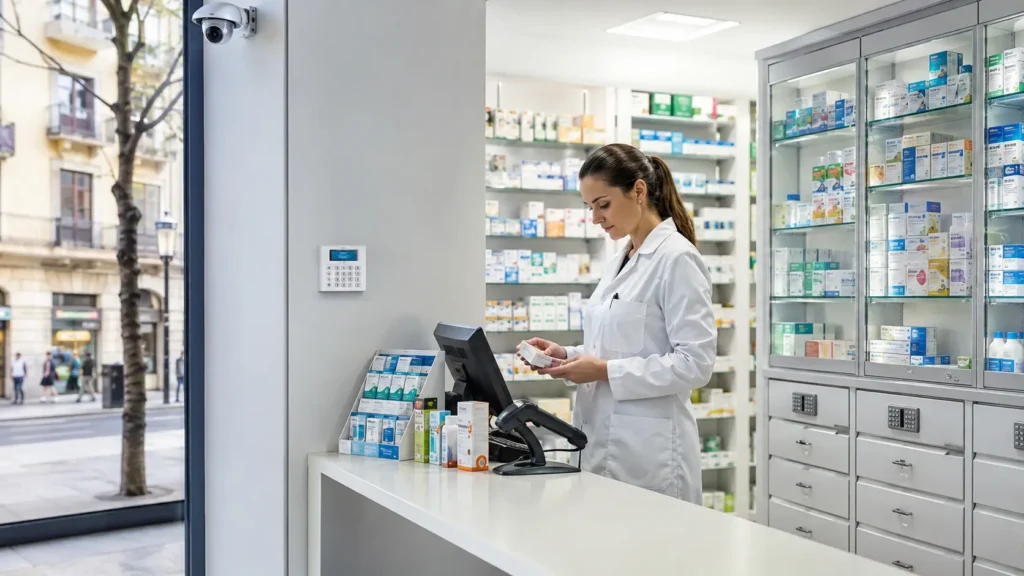
In Barcelona, where there is a high density of pharmacies per neighbourhood and many are open on night duty, this combination means that security must be approached differently: a standard alarm is not enough; instead, a system is needed that is tailored to the specific areas and risks associated with the business.
Why does a chemist’s need a different security system to that of other shops?
One pharmacy It requires enhanced security because it combines a till, a medicine cabinet and, in many cases, a night shift with very few staff. Robbery involving intimidation during the night shift is one of the risks that most concerns the sector, alongside the theft of controlled medicines, which requires a level of traceability and protection that a basic shop alarm does not provide. Added to this is the fact that many pharmacies continue to serve customers through a small window or on-duty hatch – an access point that requires its own specific security measures.
What regulations govern safety in pharmacies?
The regulations governing safety in pharmacies are based on the Law 5/2014 on Private Security, which requires alarm systems to be connected to an approved alarm receiving centre operated by a company authorised by the Ministry of the Interior. At regional and local level, the Barcelona College of Pharmacists and the Department of Health of the Government of Catalonia They also lay down specific requirements regarding the storage of narcotic drugs and psychotropic substances, which must be kept in an area with restricted access and, in many cases, under a dual-control system.
Furthermore, pharmacies are classified as premises required to implement certain security measures. For this reason, where they have an alarm system connected to an Alarm Receiving Centre (ARC), it must comply with Grade 3 requirements, which are intended for premises with a medium-to-high level of risk, in accordance with the Order INT/316/2011 and the rule UNE-EN 50131-1. This involves using approved equipment and a facility that meets the highest safety standards required for this type of business.
Although the law does not require every pharmacy to install an electronic security system, it is common for insurance companies to make theft cover conditional on the pharmacy being connected to an approved monitoring centre and complying with the regulations requiring the installation of a Grade 3 security system.
What security systems are recommended for a pharmacy?
The security systems recommended for a pharmacy They combine intrusion detection, video surveillance and access control for the most sensitive areas, rather than relying on a single system.
Alarm system with intrusion detection connected to a monitoring centre
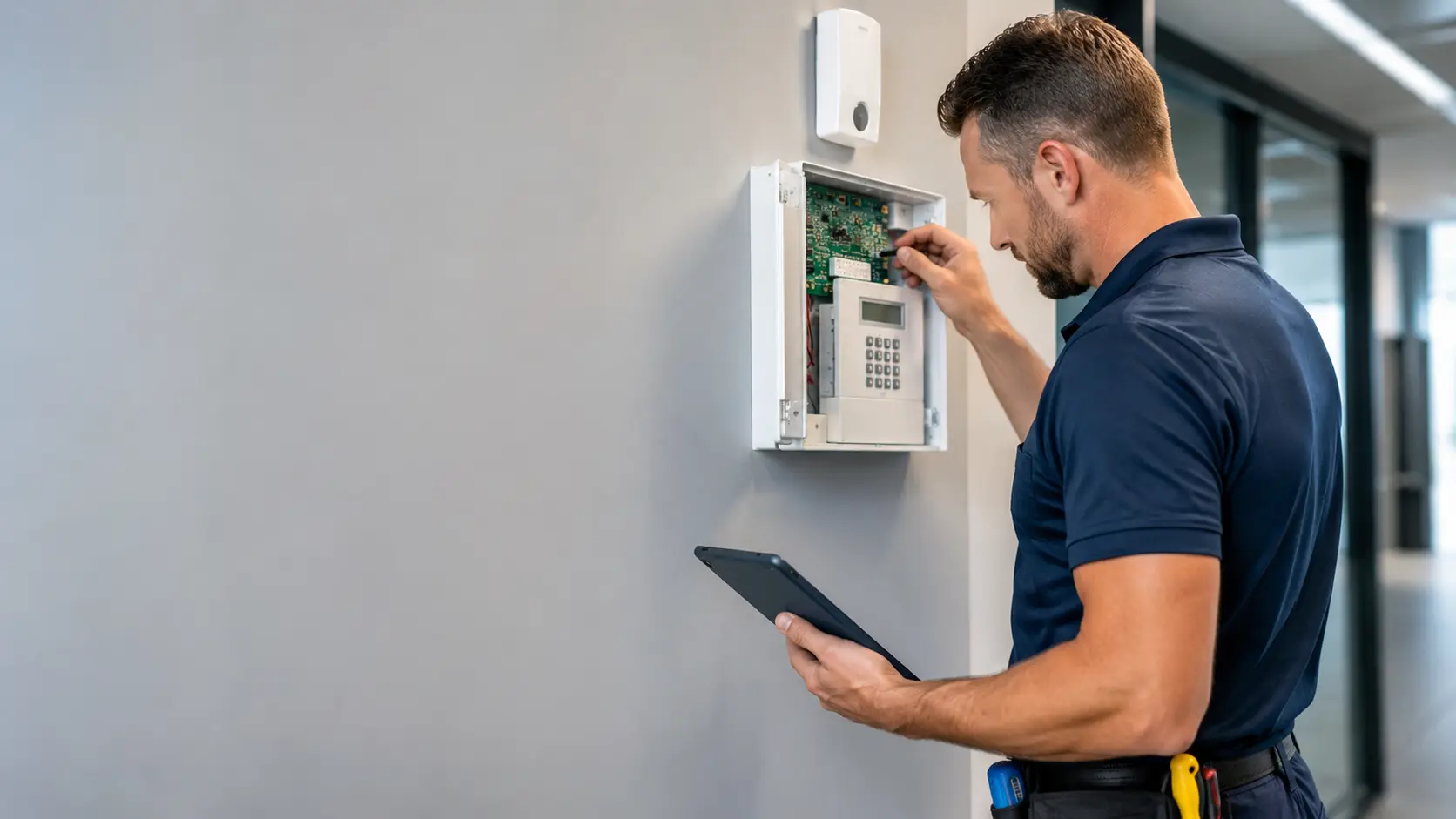
The first level is an intrusion alarm with sensors on doors, windows and the guard post, connected to a approved alarm monitoring centre to check each alarm before dispatching a response. For a pharmacy operating a night shift, this check – which takes just a few seconds – makes the difference between a false alarm and a genuine incident.
CCTV covering the counter and the security office area
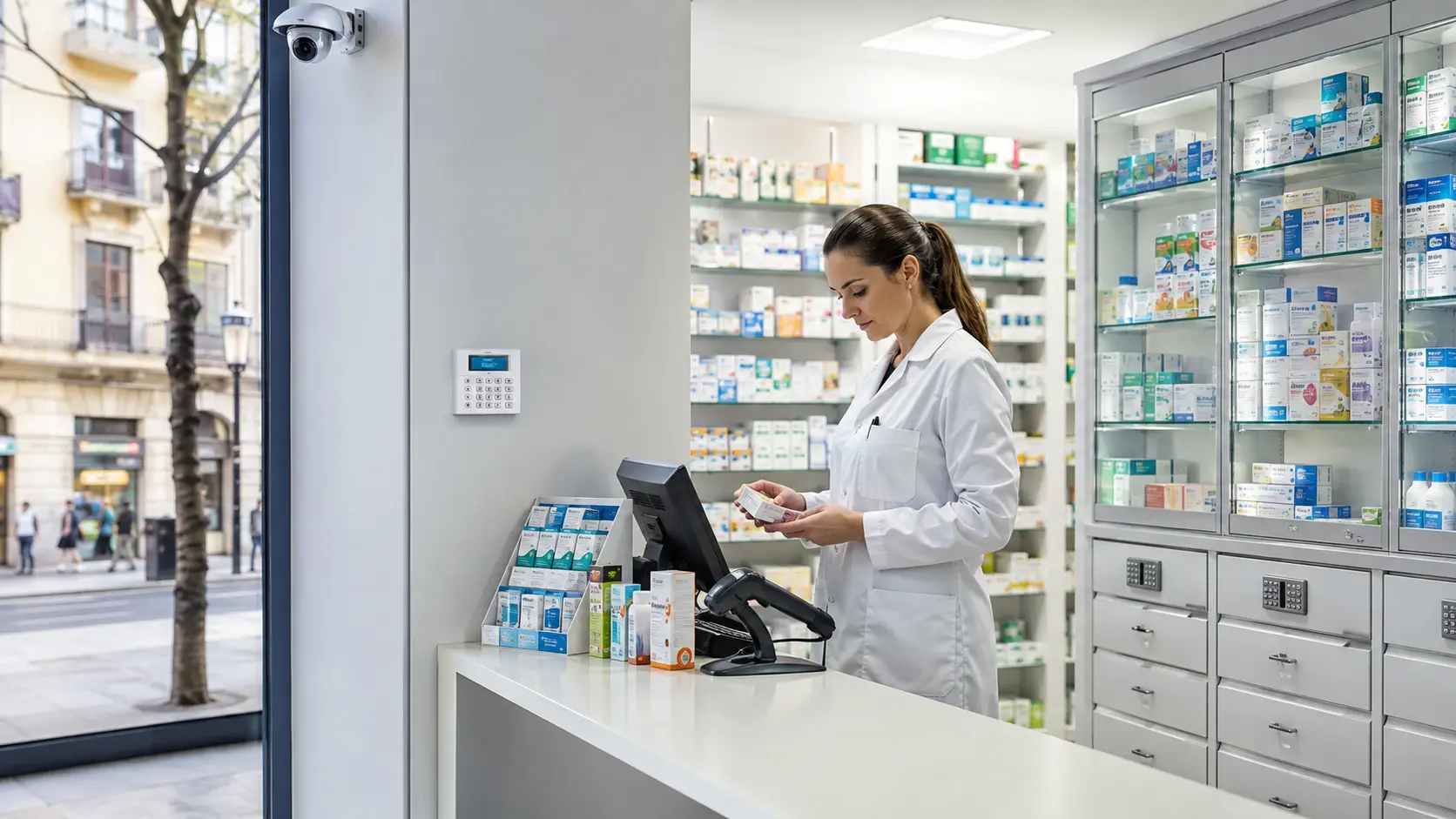
The video surveillance and CCTV cameras They must cover the point of sale, the entrance and, in particular, the night-duty window, which is the most exposed access point when the premises are open with the doors closed. A high-resolution night-time recording also makes identification easier in the event of an incident.
Access control in the narcotics area
The area where controlled medicines are stored must have restricted access, whether by means of a separate key, a code or a card, so that a record is kept of who enters and when. This traceability in the access control installation, is the one required by the Department of Health for this type of substance.
What distinguishes security in a chemist’s from that in a typical shop?
The main difference lies in the opening hours and what needs to be protected: an on-call chemist’s operates at night, serving customers through a small window, whilst most shops close their doors outside normal opening hours.
Security for pharmacies in Barcelona and the surrounding area
In Barcelona, the high concentration of on-call pharmacies per district means that each pharmacy takes on night shifts several times a month, which increases their exposure compared with shops with fixed opening hours. Having a security system specifically designed for pharmacies, which operates 24 hours a day, not only helps to protect the premises and their stock, but also provides staff with greater safety and peace of mind during night shifts.
Frequently asked questions about safety in pharmacies
Is it compulsory to install an alarm in a chemist’s?
There is no general legal obligation to install an alarm system in every pharmacy, although it is a common requirement under insurance policies and a virtually universal practice within the sector, given the risks involved, particularly during on-call shifts.
Can the security measures in the pharmacy be combined with the other security measures in the premises?
Yes, it is standard practice to integrate the alarm, CCTV and access control into a single system managed by the monitoring centre, so that a single provider coordinates the response to any incident, whether it be an attempted burglary or a technical fault.