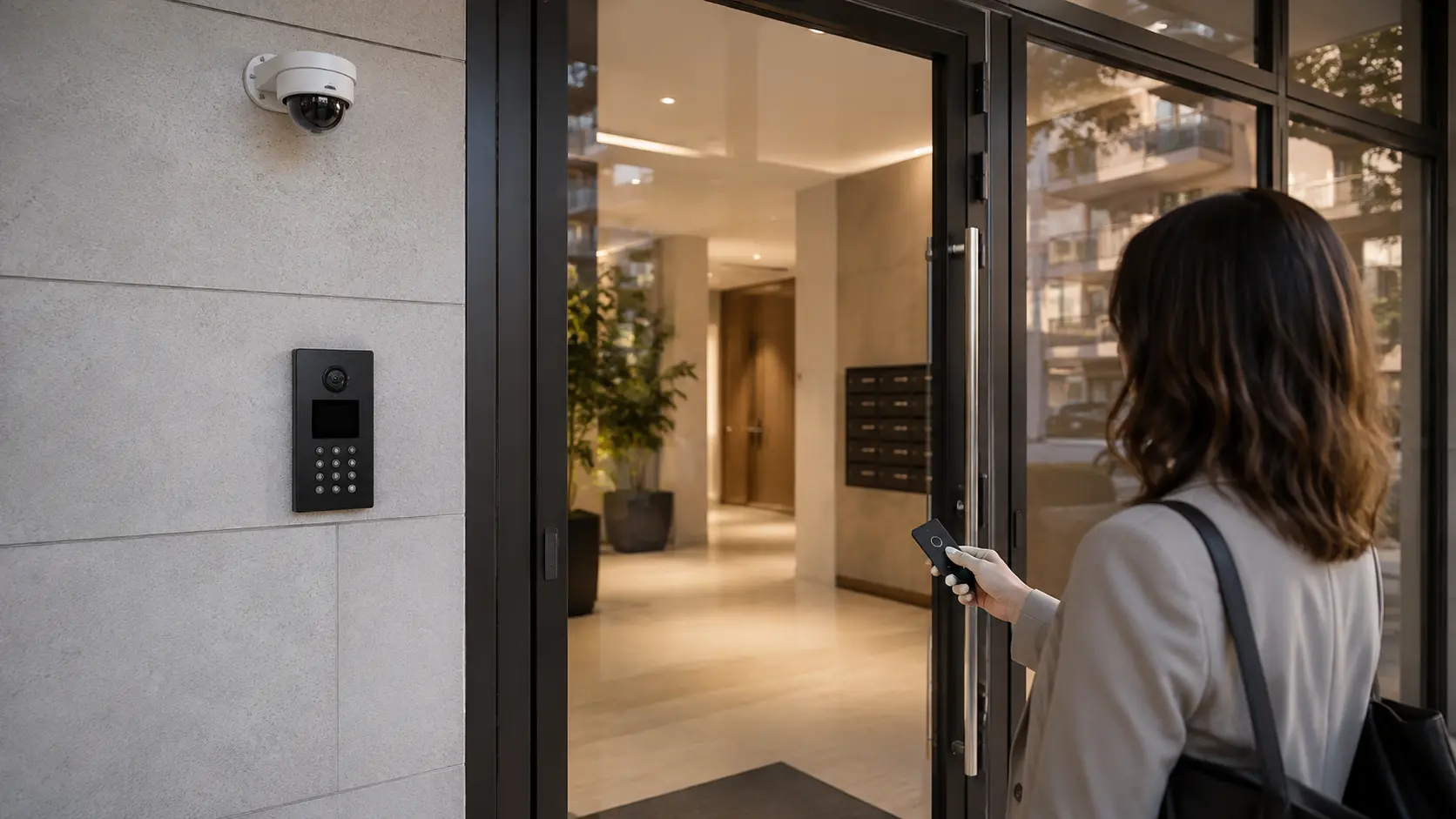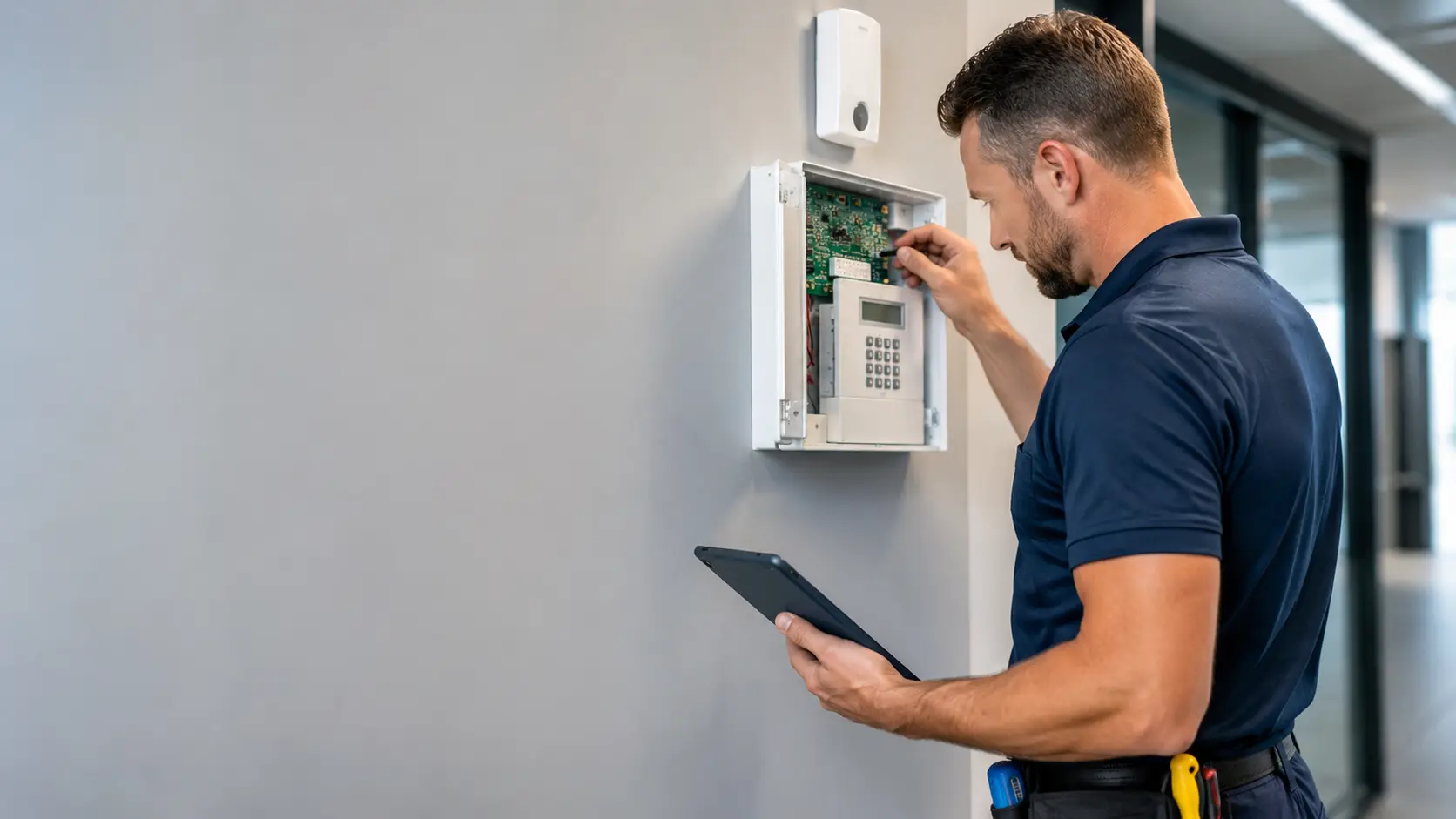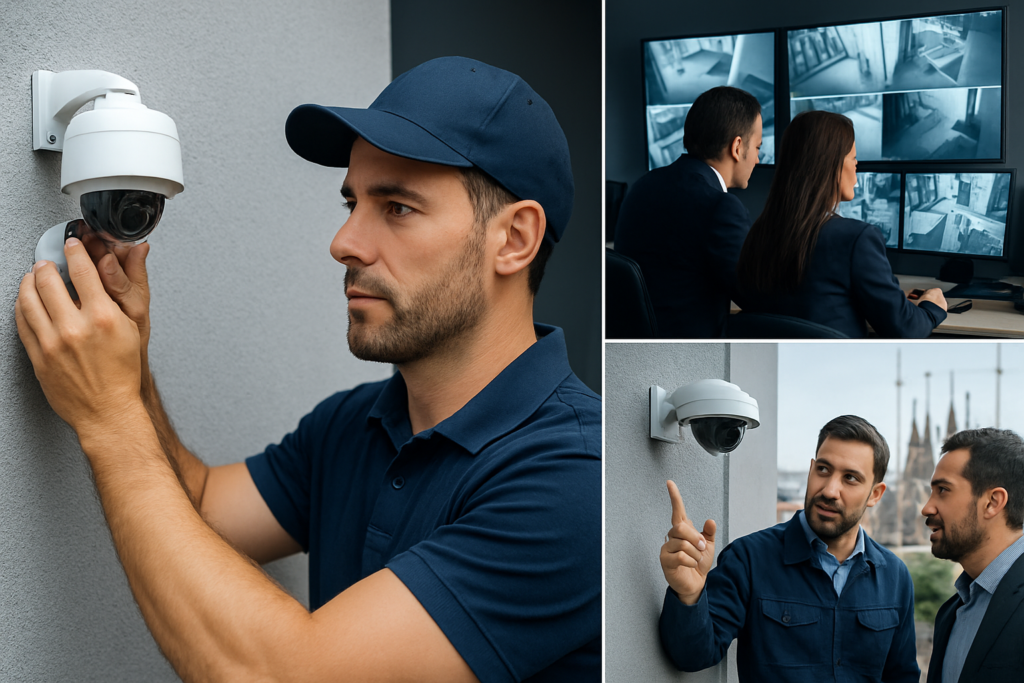
What is video surveillance and what is it used for?
Video surveillance refers to the range of technological systems based on image-capturing cameras that enable the monitoring, recording and analysis of what is happening in a specific area. Its main function is not merely to record: it is to deter, detect and document, providing both a visible layer of prevention and a source of objective evidence in the event of any incident. A well-designed CCTV system addresses the three key stages of security: before the incident (deterrence), during (detection and alert) and after (documentation).
In Barcelona and towns in the metropolitan area such as Sant Cugat, Cerdanyola and Terrassa, CCTV systems are used in homes, residents’ associations, shops, offices, industrial units and car parks. Demand has grown steadily, driven by falling technology costs and the ability to integrate cameras with alarms and monitoring centres.
How a video surveillance system works: key components
To understand how video surveillance works, it is necessary to know the components of the system and how they interact with one another. Although there is a wide variety of solutions depending on the environment and the level of coverage required, all systems share a basic architecture: cameras, a recording and storage system, a signal transmission network, and a display and management device.
The most commonly used types of security cameras in premises in Barcelona
Cameras are the most visible component of the system. Depending on their technology and format, the most commonly used in professional installations are:
- Dome cameras: A discreet design, commonly found indoors, with adjustable omnidirectional coverage. This makes it difficult to identify the direction of sound pickup.
- Bullet cameras: A cylindrical design intended for outdoor use, offering a wider field of view and a visible deterrent effect.
- PTZ (pan-tilt-zoom) cameras: Motorised, they allow remote pan and zoom control from the control centre, making them ideal for large areas.
- IP cameras: They transmit a digital signal via a data network, facilitating integration with other systems and remote access from any device.
- Thermal cameras: They detect movement by detecting temperature differences, making them useful outdoors in low-light conditions or around industrial sites.
Recorders, storage and remote viewing
The captured images are stored on digital recorders: DVRs for analogue signals and NVRs for IP signals. The storage capacity depends on the resolution of the cameras, the number of channels and the required retention period. In Spain, data protection regulations set a general maximum of 30 days for the retention of recordings in private premises.
Remote viewing is one of the most highly valued features: via a mobile app or a web dashboard, the property manager can view real-time footage from anywhere. This is particularly useful for shop owners in towns such as Sabadell, Mataró or Molins de Rei who manage several outlets simultaneously and require centralised monitoring without having to travel.
How automatic detection works in advanced video surveillance
The most advanced video surveillance systems incorporate intelligent video analytics that detect movement, virtual line crossings, presence in restricted areas and number plate recognition. When an event defined as an alert occurs, the system can automatically notify the owner, trigger an audible alarm or transmit the signal to a monitoring centre so that specialist operators can verify the incident and coordinate an appropriate response.
This integration between CCTV cameras in Barcelona and alarm receiving centres ensure that every alert generated by the cameras is visually verified by an operator before any response protocol is triggered, drastically reducing false alarms and optimising actual response times.
Analogue CCTV versus IP CCTV: key differences
Analogue systems, based on coaxial video signals, remain operational in existing installations, but have clear limitations: lower resolution, greater difficulty in integrating with other systems, and less flexibility for remote viewing and intelligent image analysis.
IP systems transmit the signal in digital format via a LAN, Wi-Fi or fibre-optic network, enabling resolutions of up to 4K, integrated video analytics, easy scalability and remote access from any device. In new installations, IP technology is the recommended standard for homes, commercial premises and industrial facilities alike.
Regulations on video surveillance in Spain: basic obligations
The installation and use of video surveillance systems in Spain is primarily regulated by Organic Law 3/2018 on the Protection of Personal Data and the Guarantee of Digital Rights (LOPDGDD). The key points for private installations are: the obligation to inform individuals who may be recorded by means of approved, visible signage; the restriction of the retention period for recordings to a maximum of 30 days; and the prohibition on pointing cameras towards public roads without authorisation from the competent authority. Failure to comply with these obligations may result in significant financial penalties.
When is CCTV surveillance compulsory in premises in Barcelona?
Spanish regulations require certain establishments to have approved video surveillance systems in place: banks, bureaux de change, jewellers, gambling establishments, pharmacies and certain night-time entertainment venues, amongst others. Furthermore, many commercial insurance policies include as a condition of cover the existence of an operational video surveillance system with continuous recording and a certified minimum retention period.
For premises where surveillance cameras are not mandatory, their use provides an additional level of security that facilitates the investigation of incidents and the management of disputes. The alarm receiving centre Connected to the system, it enables an immediate response to night-time alerts without the owner needing to be present, making video surveillance a key component of any comprehensive security strategy in the Barcelona metropolitan area.