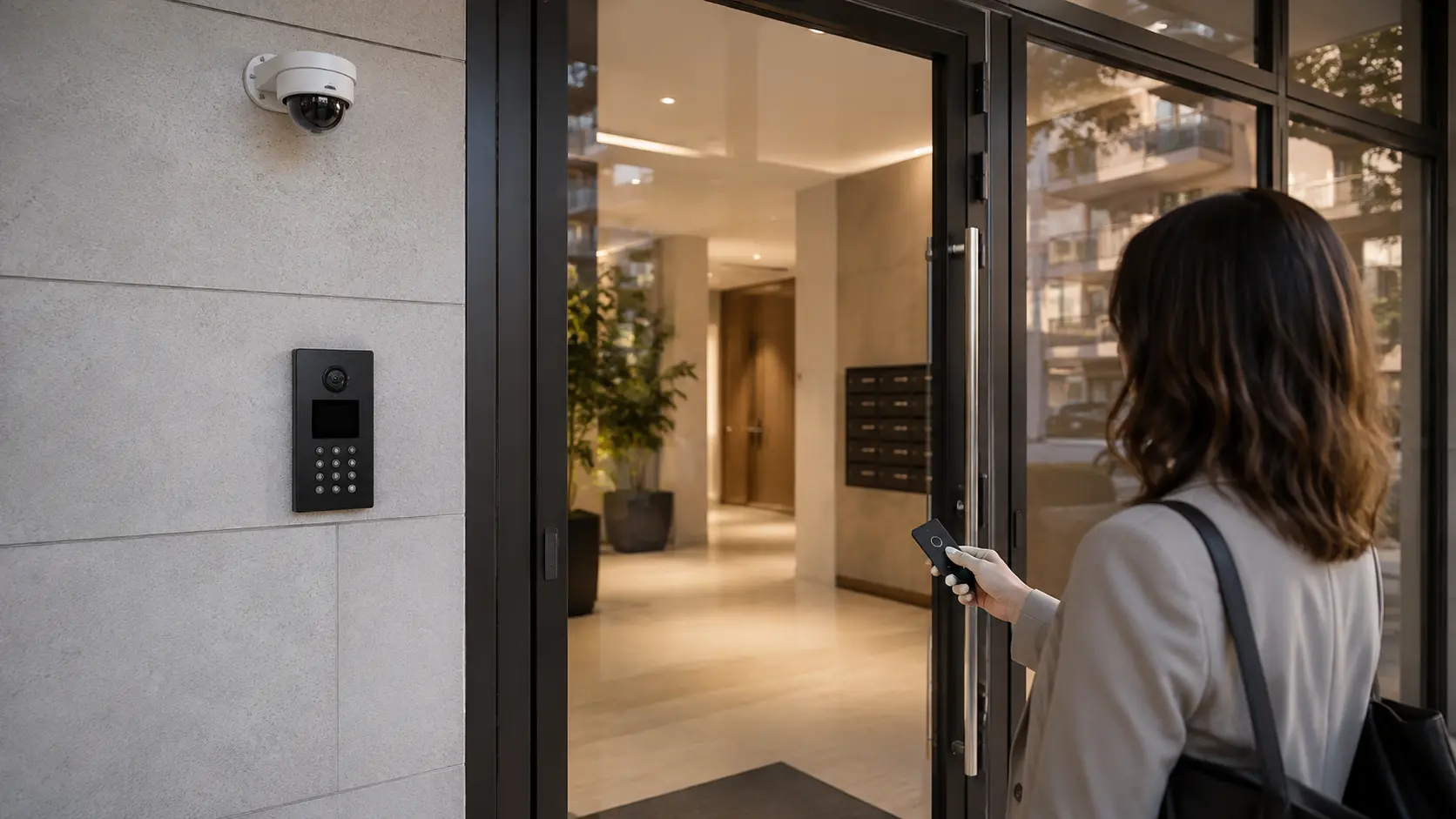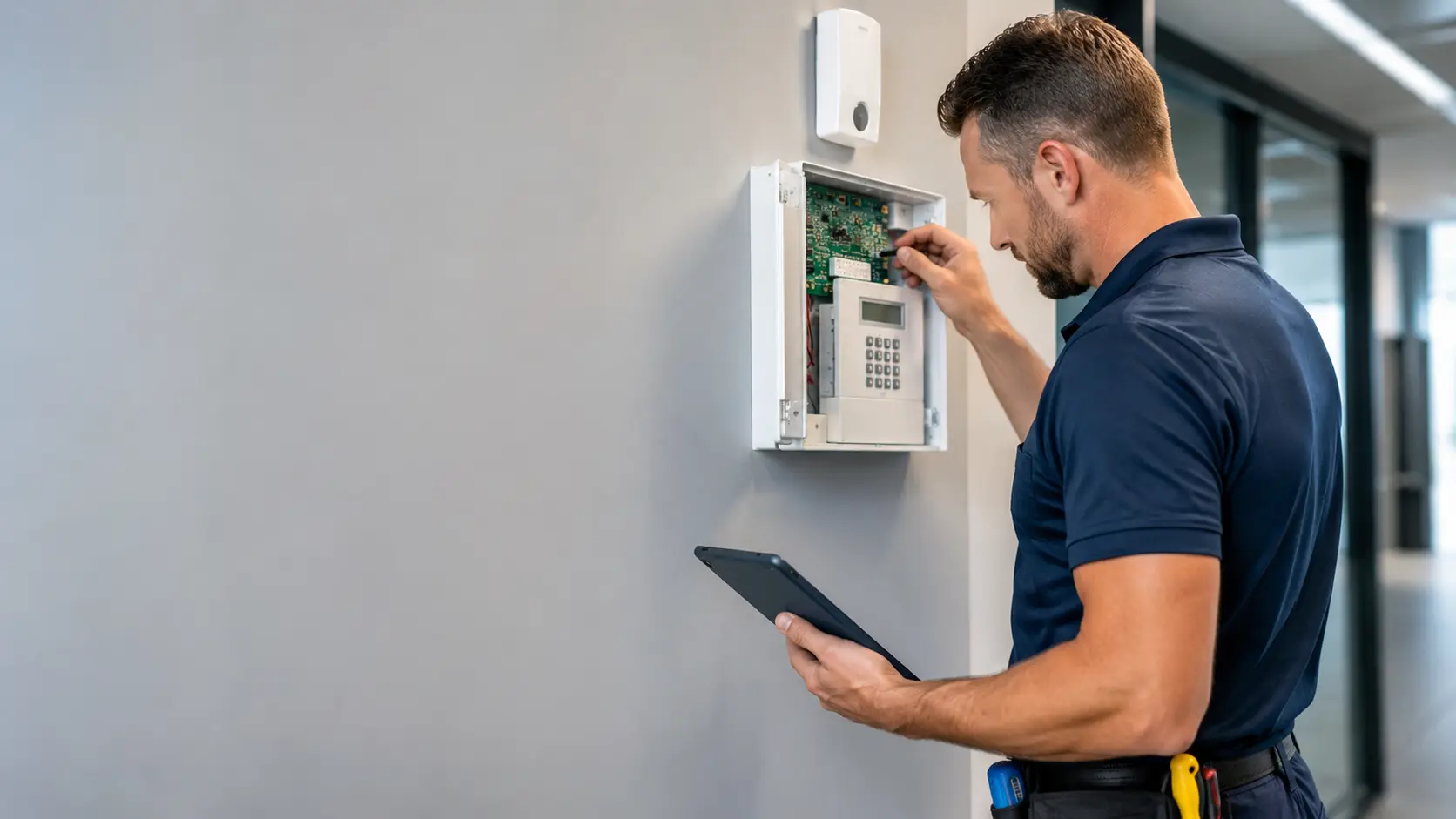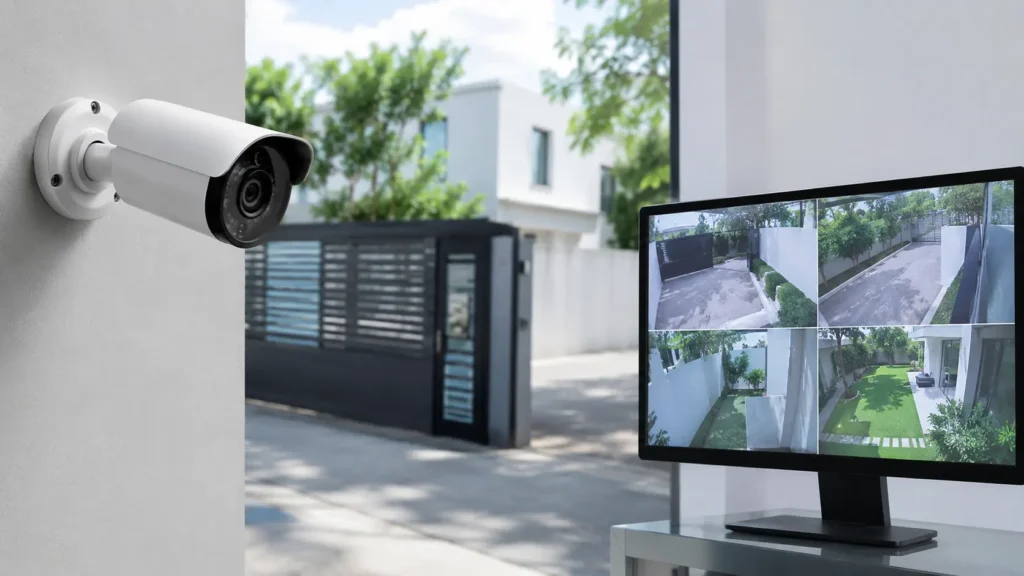
To understand how CCTV works, it should be viewed as a comprehensive system for capturing, recording and managing images, rather than as a single, stand-alone camera. It operates using cameras that record what is happening in a given space, a system that stores or processes those images, and a platform that allows them to be viewed live or reviewed when necessary.
In a professional installation, video surveillance can also incorporate video analytics, remote access and integration with other security systems. This enables relevant events to be detected, incidents to be verified and the response to be managed with greater precision, depending on the system configuration.
What is a Closed-Circuit Television (CCTV) system?
A professional video surveillance system It is usually organised as a closed-circuit television system, known as CCTV. In this type of system, the images captured by the cameras are not broadcast publicly, but are transmitted within a controlled facility so that they can be viewed, recorded and managed securely.
This setup enables the video surveillance system to operate as a complete circuit. The cameras capture the footage, the system transmits it to the relevant recorder or platform, and authorised users can view the live feed or review recordings as and when necessary.
Capture devices with analogue or IP cameras
Cameras are the devices responsible for capturing images within a video surveillance system. They must be installed at pre-determined locations to cover access points, perimeters, thoroughfares, communal areas or spaces where an incident might occur.
In a professional installation, either analogue cameras or IP cameras may be used, depending on the system design. Analogue cameras transmit the video signal to a compatible recorder, whilst IP cameras operate over a network and allow for more flexible management of the video feed, device configuration and remote access, where the system permits.
Recording and storage systems
The images captured by the cameras are sent to a recording and storage system. Depending on the design of the installation, this system may use a physical recorder, hard discs, internal servers or cloud-based solutions.
Its purpose is to store the images for the specified period so that they can be viewed at a later date. This makes it possible to review an incident, check what happened on a specific date and time, or have a visual record available when necessary.
Real-time management and visualisation software
The management software allows you to view camera feeds, review recordings, set up user accounts and manage the system from authorised devices. Depending on the installation, the footage can be viewed in real time on a monitor, computer, mobile phone or monitoring platform.
This layer is what enables us to manage the footage in an organised manner. It is not just about recording video, but about being able to locate a specific camera, review a particular time slot, monitor who accesses the system, and use the recordings when they are actually needed.
The step-by-step process when a camera detects movement
When a CCTV camera detects movement, the system can record the event and trigger a specific action depending on the settings configured. To understand how CCTV works At this point, it is important to distinguish between simple continuous recording and a system designed to identify relevant events.
The standard procedure is as follows:
- The camera detects movement in a configured area.
- The system records the event and links it to a specific time and camera.
- The images are recorded or made available for review.
- If the system allows it, a notification is generated in the relevant application or platform.
- In premises connected to an alarm system or Alarm Reception Centre, the images can be used to verify the incident more effectively.
This process makes it possible to pinpoint specific events without having to review long stretches of video footage without context. Furthermore, it enables more precise management when something out of the ordinary occurs, as the system can help identify where the movement took place, when it occurred and which images are related to that incident.
Artificial intelligence and video analytics in video surveillance
The systems for CCTV The most advanced systems incorporate artificial intelligence and video analytics features that go beyond simply recording images. Rather than merely recording everything that happens, the system can analyse the scene and automatically detect specific events.
Depending on the technology installed, video analytics can detect movement, line crossings, entry into restricted areas, or the presence of people and vehicles. This helps to filter out relevant events, reduce unnecessary alerts and focus attention on situations that may require further investigation.
These features are particularly useful in homes with outdoor areas, residential estates, shops, industrial units or facilities where it is important to monitor perimeters, access points or sensitive areas. However, the features available will depend on the system installed, the configuration set up and the intended use for each project.
Legal video surveillance in Spain
The installation of a CCTV system must comply with legal requirements relating to data protection and privacy. In Spain, video surveillance must comply with the GDPR, the LOPDGDD 3/2018 and the guidelines of the Spanish Data Protection Agency.
In private homes, businesses, owners’ associations or professional premises, the recording of images must be limited to those areas necessary to ensure security and respect the privacy of third parties. Furthermore, where required by law, the existence of the system must be indicated by means of visible signage, and access to the recordings must be restricted to authorised persons only.
It should also be borne in mind that images cannot be retained indefinitely. As a general rule, the maximum retention period is 30 days, unless the recordings need to be kept because they relate to an incident, an investigation or a request from the competent authority.
Having the system professionally installed ensures not only that it functions correctly from a technical point of view, but also that it is implemented in accordance with the relevant legal requirements in each case.
Why self-installed CCTV is not always enough
A self-installed camera can be useful for monitoring a specific area, but it does not always offer the same reliability as a professional CCTV installation video surveillance carried out by a CCTV security company. The difference lies in the overall design of the system: camera placement, image quality, recording, access to footage, alert settings and maintenance.
In a professional installation, an assessment is carried out to determine which areas need to be monitored, where each camera should be positioned, how the footage will be stored, and who will have access to it. It also sets out what should happen when the system detects movement or records a potential incident.
This approach is particularly important in businesses, communities, industrial premises, shops or homes with several vulnerable points. In such cases, video surveillance can be integrated with security alarms, perimeter protection, access control or Alarm Reception Centre, depending on the property’s requirements.
How Dumo Seguridad integrates video surveillance into a professional solution
At Dumo Security, before install CCTV cameras in Barcelona It is designed according to the specific characteristics of each home, residential block, business or professional premises. Before installing cameras, the access points, vulnerable areas and the intended use of the system are analysed.
The aim is for the footage to be useful when an incident occurs. To this end, the location of the cameras, the recording system, access permissions and any integration with alarms, video analytics, access control or an Alarm Receiving Centre are defined.
This approach makes it possible to tailor video surveillance to the level of risk in each area and to maintain a more precise, organised and easy-to-manage security solution.
Frequently asked questions about how security cameras work
Can CCTV trigger an alert automatically?
Yes, when the system includes motion detection, video analytics or integration with other security systems. In such cases, it can generate alerts in response to pre-configured events, such as movement in a specific zone, line crossing or entry into a restricted area.
Who has access to the CCTV footage?
Only authorised persons should be granted access. In businesses, communities or professional premises, it is advisable to define user permissions to prevent unauthorised access and maintain proper control over recordings.
What happens if a camera films an area it shouldn’t?
This may give rise to privacy or data protection issues. It is therefore important to position the cameras correctly and limit the area covered to those necessary for the security of the protected area, avoiding private areas or third-party premises without justification.
Does CCTV footage count as evidence in the event of an incident?
It can provide useful information if the footage has been recorded and stored correctly. In the event of an incident, the recordings can help to document what happened for insurance companies, law enforcement agencies or the relevant authorities.
How often should a CCTV system be checked?
It is advisable to check regularly that the cameras are capturing the image properly, that the system is recording correctly, that access to the footage is working, and that the authorised users remain appropriate. The frequency of these checks will depend on the type of installation, the level of use and the importance of the system to the security of the premises.